
January Birthstone, Garnet in All Its Quiet Resilience
The January birthstone is garnet, a deep red silicate older than most jewellery traditions. A careful guide to its meaning, mineralogy, history, and how to choose a piece that lasts.

Quick facts3ShowHide
- ElementFire
- ZodiacCapricorn, Aquarius
- Sits well withEndurance, grounding, faithful return
The January birthstone is garnet, and the answer has been the same for so long that most people forget garnet is not one stone but six. The deep wine red on the gift card is almandine or pyrope, the two most common species. The rest of the family runs from warm orange through raspberry pink to a green so bright it competes with emerald. All of them are garnets, and all of them are January.
What is the January birthstone?
The January birthstone is garnet. Both the modern and traditional birthstone calendars agree on this, which is unusual. Most months carry some negotiation between an older lapidary tradition and the 1912 list standardised by the American National Association of Jewelers. January is one of the few where the two lineages settled on the same stone and never shifted.
Red garnet was the most worked and traded coloured stone of the Mediterranean and European bronze ages, more common in early jewellery than ruby or spinel. By the time anyone started writing birthstone calendars, garnet had centuries of unbroken association with the deep winter months. The modern list inherited that without needing to argue about it.
If you came here expecting a single red stone, you have the right answer. The longer one is that garnet is a family, and the family is where most of the interest lives.
Garnet, the deep red January birthstone
Garnet is a group of closely related silicate minerals that share a crystal structure but differ in chemistry. Six species are recognised in the trade: almandine, pyrope, spessartine, grossular, andradite, and uvarovite. Hardness across the family sits between 6.5 and 7.5 on the Mohs scale, durable enough for daily wear in rings, pendants, and earrings with sensible care.
The two species most people picture when they hear the word are almandine (iron aluminium silicate, deep brownish red) and pyrope (magnesium aluminium silicate, brighter purer red). Most natural garnets are not pure species but mixtures along the chemical series between two end members. A typical commercial red garnet is an almandine-pyrope blend, with the ratio determining whether the stone leans warm or cool.
Garnet grows naturally in rhombic dodecahedra, twelve-sided crystals with diamond-shaped faces. The Latin name granatum, meaning pomegranate, comes from the resemblance between rough garnet crystals embedded in mica schist and the seeds of the fruit. Refractive index is high enough that well-cut garnets show real internal fire, particularly in faceted pyrope and pyrope-rich blends.
The garnet family beyond red
The family runs further than most people realise.
Spessartine. Manganese aluminium silicate, warm orange to deep mandarin. The best material comes from Namibia and Nigeria and is sold as mandarin garnet. The colour is genuinely vivid, closer to a warm citrus than the muddy orange of cheaper hessonite.
Demantoid. A green variety of andradite, with a refractive index higher than diamond. Russian demantoid from the Ural Mountains is the historic standard, often containing horsetail inclusions of byssolite that gemologists treat as a quality marker. Namibian and Madagascan demantoid are more available.
Tsavorite. A green variety of grossular, found primarily in Kenya and Tanzania. The colour rivals fine emerald but tsavorite is harder, less included, and never oiled. Named in the 1960s after Tsavo National Park.
Rhodolite. A pyrope-almandine blend that sits at a raspberry pink to purple-red point on the chemical series. Named after the rhododendron flower. Most rhodolite is from East Africa or Sri Lanka.
For a deeper technical treatment of each species, the garnet complete guide covers the full mineralogy. The point worth carrying here is that buying a garnet does not commit you to red. The whole family qualifies as the January birthstone.
History of garnet through the ages
The trail is long and unusually well documented.
Egyptian dynastic jewellery used red garnet beads and inlays from at least 3100 BCE, with carved garnet scarabs appearing through the Middle and New Kingdoms. The deep red was associated with blood, life force, and the protective power of Isis. Garnet inlays sit alongside lapis and turquoise in some of the most famous funerary pieces, including material recovered from the tomb of Tutankhamun.
Roman signet rings from the late Republic and early Empire frequently used garnet intaglios. The hardness made garnet a practical seal stone, capable of taking a fine carved figure that printed cleanly into wax. Senators and military officers carried garnet signets as identification, and surviving examples in museum collections run into the thousands.
Medieval European travellers carried small garnets as protection on long journeys, drawing on a tradition that ran back through Roman and earlier sources. The stone's association with safe return rather than safe departure is the older one, and it is the thread that connects the deep red to January's mid-winter inward energy. Garnet was the stone you carried so that you would come home.
Bohemian garnet from what is now the Czech Republic dominated European jewellery from the late 1500s into the 1800s. Bohemian pyrope is small, intensely red, and was traditionally set in dense clusters that catch candlelight in a way diamonds cannot. The modern trade is dominated by East Africa (Tanzania, Kenya, Mozambique, Madagascar), with significant material from Brazil, India, Sri Lanka, Russia, and the United States.
January birthstone meaning and tradition
January is a quiet month. In the northern hemisphere it is the depth of winter. In the southern hemisphere it is high summer, but even there January carries a turning-inward quality, the long pause after the festive season before the working year resumes. Garnet maps onto that quality precisely.
The traditional meaning runs along three threads.
Endurance. Red garnet was the warming stone of the cold season, set into rings and amulets carried through long European winters. The tradition predates any modern crystal practice by millennia. Garnet was the stone you wore when the days were short and the work was hard, and the meaning has not shifted.
Faithful return. The traveller's stone meaning is older than the protective stone meaning. Garnet was given at parting, with the understanding that the wearer would come back. Wedding bands set with garnet appear in late Roman and early medieval sources for the same reason. The stone is not about leaving, it is about returning.
Mid-winter inward energy. Modern crystal practice associates garnet with the root chakra and grounded persistence. January is the month for finishing what was started and settling into the next stretch of work, and garnet is the stone for that mood. It does not promise excitement. It promises that the person wearing it will still be standing at the end of the season. For dates and tradition in one place, the January birthstone page gathers them.
How to choose a garnet piece
A few honest notes for buyers.
Cut. Garnet rewards good cutting. A well-cut almandine or pyrope shows internal fire that competes with much more expensive stones. A poorly cut garnet looks flat regardless of colour quality. For faceted pieces, look for a brilliant or modified brilliant cut with visible flash across the table. For cabochons, the curve should be high enough to hold colour rather than flattened to save weight.
Clarity. Most red garnets are eye-clean at typical sizes. Visible inclusions in almandine or pyrope are unusual and a reasonable reason to walk away. Demantoid is the exception, where horsetail inclusions of byssolite are valued and considered a Russian-origin marker. Tsavorite tends to be cleaner than emerald and should be priced accordingly.
Country of origin. Origin matters more for collectible species (Russian demantoid, Bohemian pyrope, Tsavo tsavorite) than for general red garnet. East African material dominates the modern supply and is reliably sourced. For collectible pieces, ask for provenance documentation.
Treatments. Garnet is one of the few coloured stones that is essentially never treated. No heat, no oiling, no irradiation in standard trade practice. The stone you buy is the one the earth produced.
Care. Garnet handles water and most solvents without complaint. Avoid ultrasonic cleaning on demantoid and on pieces with visible inclusions. Mild soap and warm water is enough.
January birthstone gift ideas
A short guide by intention rather than budget.
For someone steady and inward by nature. A deep red almandine or pyrope pendant in a simple setting. The classic January piece. It carries the full weight of the tradition without trying.
For someone who wants the birthstone connection without the obvious red. A rhodolite (raspberry) or spessartine (mandarin orange) piece. Both are unmistakably garnet, both qualify as the January birthstone, and both read more contemporary than a deep wine red.
For someone who finds garnet's intensity a little heavy. Pair the gift with a softer companion stone. Rose quartz is the gentler alternative and balances garnet's heat with a quieter, more diffuse energy. A small rose quartz cabochon alongside a garnet ring works well for people who want the January connection without sitting in the deep red alone.
For someone who wants warmth without the depth. Carnelian is the warmer, more open alternative. Where garnet pulls inward, carnelian pushes outward. It does not replace garnet as a January birthstone, but it sits beside it as a complementary stone for people who find pure garnet a bit too inward for their nature.
For technical detail on the stone itself, the garnet crystal page covers the mineralogy, sourcing, and care notes in depth.
January birthstone and zodiac
January carries two zodiac signs, and garnet pairs sensibly with both.
Capricorn (December 22 to January 19). Earth sign, ruled by Saturn, traditionally associated with discipline, endurance, and the long view. Almandine and pyrope are the natural pairings. The deep red maps onto the Capricorn capacity to hold steady through long, cold seasons without losing direction. Capricorns tend to wear the classic red well, since the stone matches the temperament rather than fighting it.
Aquarius (January 20 to February 18). Air sign, ruled by Saturn in the older system and Uranus in the modern one, traditionally associated with independent thought and quiet reform. Aquarians often suit the more unusual garnets better than the classic red. Tsavorite green, demantoid green, and the rare colour-change garnets fit the Aquarian preference for things that are not what they first appear. Spessartine works for the warmer Aquarian temperaments.
For people born in the Capricorn-Aquarius cusp, mid-January, the broader garnet family makes the choice easier. A rhodolite or a colour-change piece sits between the deep red of Capricorn tradition and the unusual colours that suit Aquarius, and the cusp is one of the few places where the family range becomes practically useful in choosing.
The right January birthstone is the one that fits the person, and the deeper truth about garnet is that the family is wide enough to fit almost anyone born into the month. Knowing that the choice is not limited to deep red, and that the tradition runs back through endurance and faithful return rather than display, is most of the work.
Want a piece from this guide?
Until our shop is live, we hand-arrange orders through Instagram. Tap to ask what is currently available.
Preview the message
Hi AU Crystals,

I was reading your January Birthstone, Garnet in All Its Quiet Resilience page (aucrystals.com/blog/january-birthstone-guide).

I wanted to ask about the stones in this guide.
A starter message gets copied to your clipboard. Paste it into the DM on Instagram.
A few honest questions.
What is the January birthstone?
The January birthstone is garnet. It is a family of silicate minerals with six recognised species, most commonly seen as a deep red stone but also found in orange, green, raspberry, and rare colour-change varieties. Garnet has been the January birthstone in both modern and traditional calendars without interruption.
Why is garnet the birthstone for January?
Garnet sits in January for two reasons. The traditional one ties the deep red colour to mid-winter blood and warmth in the European calendar. The modern one, formalised in 1912 by the American National Association of Jewelers, kept garnet in place because the tradition was already settled and the stone had centuries of unbroken association with endurance and faithful return.
Is garnet only red?
No. Red garnets (almandine and pyrope) dominate the market because they are the most abundant, but the garnet family includes orange spessartine, vivid green demantoid, intense green tsavorite, raspberry rhodolite, and the rare colour-change garnets that shift between greenish and reddish under different light. All of these are real garnets and all qualify as the January birthstone.
What is a good January birthstone gift?
A red almandine or pyrope garnet pendant or ring sits in the heart of the tradition and wears well daily. For something less expected, a rhodolite (raspberry pink) or spessartine (warm orange) piece keeps the birthstone connection while reading more contemporary. Garnet is durable enough that even a child can wear a small piece without much worry.
Keep reading.
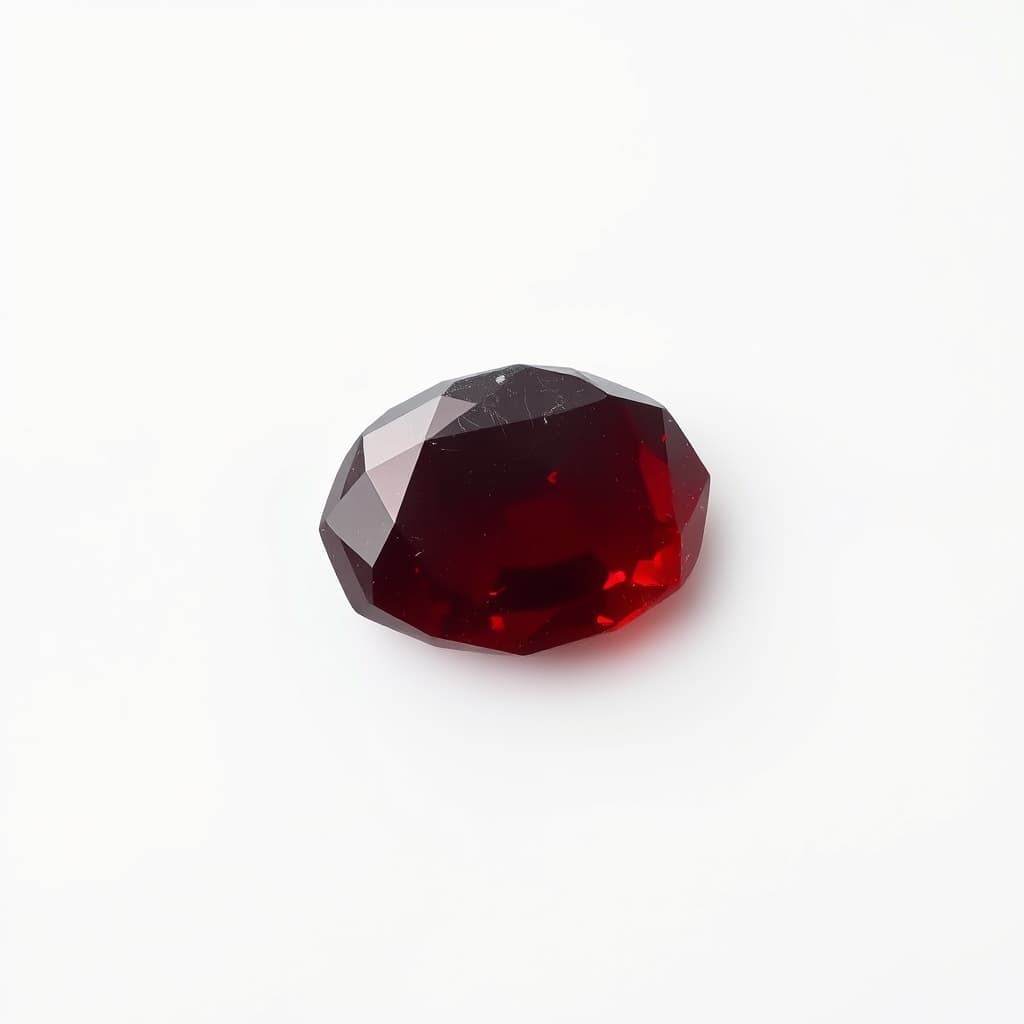
Garnet, the Stone of Quiet Endurance
A family of silicate minerals most often seen as deep red but ranging through orange, green, and rare colour-change varieties. The traditional January birthstone of endurance, the mineralogy behind the six major types, and how to choose well.

March Birthstone, Aquamarine and Bloodstone in Their Honest Tradition
The March birthstone is two stones, not one. Aquamarine for the modern calendar, bloodstone for the older one, and good reasons to know both.
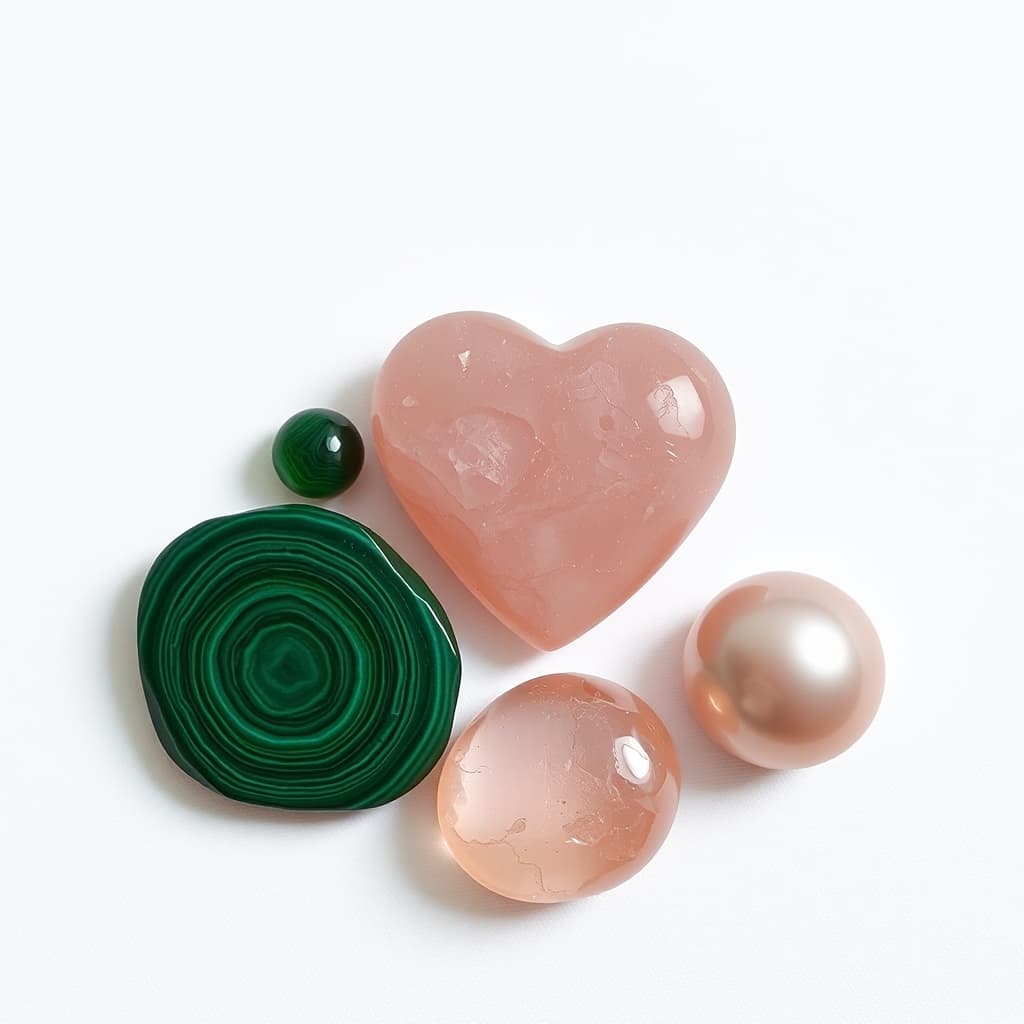
Crystals for Love and Relationships, Traditional Companions
The stones paired with love across Hellenistic, Vedic, and European folk sources, and what each one actually supports. Written for self-compassion and relational work, not romantic manifestation.
Sit with us on Sundays.
One quiet letter every week. New writing, a crystal to consider, and whatever we have been thinking about. No tracking pixels, no affiliate noise.
By subscribing you agree to receive weekly emails from AU Crystals. Unsubscribe anytime. See our privacy note.