
February Birthstone, Amethyst the Stone of Clear Thinking
The February birthstone is amethyst, a violet quartz tied for centuries to sober judgement, quiet sleep, and clear thinking. A careful guide to choosing one.

Quick facts3ShowHide
- ElementAir
- ZodiacAquarius, Pisces
- Sits well withClear thinking, sober judgement, restful sleep
The February birthstone is amethyst, a violet quartz that has held its place on the calendar for longer than almost any other stone. The colour is the obvious draw, but the older tradition is more interesting than the modern gift-shop reading. Amethyst was, and is, the stone of clear thinking. The Greeks named it for sobriety. The Romans set it into wine cups. The medieval Church carved it into bishop rings. The thread runs unbroken into the present, and it shapes how a good piece is chosen today.
What is the February birthstone?
The February birthstone is amethyst, in both the older traditional calendar and the modern 1912 American list. There is no second stone, no rival tradition, no commercial swap. February has carried amethyst since at least the early medieval lapidary writing, and the Greek root of the name predates that by another thousand years.
This is unusual. Most birthstone months carry layered traditions that disagree with each other. February does not. When the same stone is given the same month for two thousand years, the symbolic load settles into the stone in a way that newer pairings have not had time to develop. The question for someone born in February is not which stone, but which amethyst.
Amethyst, the violet February birthstone
Amethyst is a violet variety of quartz. Chemically it is silicon dioxide, the same as clear quartz, smoky quartz, citrine, and rose quartz. The colour comes from a combination of trace iron in the lattice and natural gamma irradiation from surrounding rock over geological time. Iron alone produces yellow citrine. Iron plus radiation produces the violet. Heat the same crystal hard enough and the violet shifts back through yellow to clear, which is how most commercial citrine on the market is actually heat-treated amethyst.
Hardness sits at 7 on the Mohs scale, the same as all quartz. That places amethyst comfortably in the daily-wear range for rings, pendants, earrings, and bracelets. It will scratch glass, will not scratch topaz, and will hold its polish for decades with reasonable care.
The colour range matters more than people often realise. Pale lilac amethyst, deep grape amethyst, and the rare cool-violet with red flashes are all the same mineral, but the visual and price difference is significant. The most prized natural saturation reads a clean medium violet with a faint red secondary tone in daylight. Pieces that read greyish, blackish, or smoky-violet are usually from poorer deposits or from sections of better deposits that did not receive enough irradiation.
Amethyst varieties and origin
Origin shapes amethyst more than almost any other birthstone, because the same mineral takes very different colour and clarity from different deposits.
Brazilian amethyst. The bulk of the world's commercial amethyst comes from Brazil, particularly Rio Grande do Sul. The colour tends to run pale to medium violet with good clarity, and the supply is reliable enough that most affordable jewellery amethyst is Brazilian. A pale Brazilian piece is honest goods. It is not lower quality, only lighter.
Uruguayan amethyst. The deposits across the border in Artigas produce a deeper, more saturated violet, often with a slight blue secondary tone. Uruguayan stones are the dark velvety amethysts most people picture when they hear the word. They cost more, sit heavier in a setting, and are the right choice for someone who wants the stone to read clearly violet from across a room.
Madagascar and Zambia. Both produce intense saturated material with strong colour. Zambian amethyst in particular is known for a cool deep violet with red flashes under incandescent light, sometimes mistaken for the rarer Russian style. Madagascar produces a similar saturation in smaller crystals and clusters.
Siberian amethyst. The historical name for the deepest, coolest, red-flashing amethyst comes from old Russian deposits now largely exhausted. Modern stones described as "Siberian quality" are usually top-grade Zambian or Uruguayan material at that saturation. True Siberian-origin amethyst is collector territory.
For the technical mineralogy, including the difference between natural and synthetic amethyst, the amethyst crystal page covers it in proper depth.
History of amethyst
The Greek name is a-methystos, meaning not drunken. The traditional reading is that a violet wine cup, or a violet stone set into a cup, would prevent intoxication. The deeper symbolic reading, which makes more practical sense, is that the stone marked sober judgement. A drinker who carried amethyst was carrying a reminder of their own composure. The reminder was the work, not the mineral.
Roman wine glasses were sometimes carved from solid amethyst for senators and patricians. The vessels displayed restraint and seriousness rather than hid intoxication, and they survived as status objects long after the literal sobriety reading had faded. Several still exist in museum collections.
Bishop rings. From the medieval period through the early modern Church, amethyst was the stone set into the rings of bishops and cardinals. The choice tied directly to the sobriety tradition. A bishop's ring carried amethyst because the office demanded clear judgement and the absence of self-indulgence, qualities the stone had symbolised since antiquity. The episcopal ring is still traditionally amethyst today, an unbroken line from the Greek root through to the modern Church.
Lapidary writing from the medieval period adds the sleep tradition. Amethyst placed under a pillow was said to bring untroubled sleep and clear dreams, and the practice persists in modern crystal use. The longer thread, sober judgement, restful mind, clear thinking, holds across all of these readings.
For the full chronological history with sources, the amethyst complete guide sets it out at length.
February birthstone meaning and tradition
February in the northern hemisphere is the deep quiet of winter, the month before the first thaw. In the southern hemisphere it is the late summer slowing toward autumn. Either reading suits amethyst. The stone is not a stone for action. It is a stone for the long pause before action, the kind of waiting that lets the next move be a clear one rather than a reactive one.
The traditional meanings stack cleanly.
Clear thinking. The Greek root and the Church's bishop-ring tradition both point at the same thing. Amethyst is given to people who need to think well about something difficult. The stone does not make decisions. It marks the discipline of making them slowly.
Sober judgement. The original sobriety reading is broader than alcohol. The Greek and Roman use covered any kind of clouded judgement, intoxication being one example among many. Modern crystal practice keeps the broader reading. Amethyst is the stone for someone trying to see something clearly that they would rather not see at all.
Restful sleep. The medieval pillow tradition is one of the longest unbroken folk uses of any stone. Amethyst placed by the bed, or worn at night, is associated with quiet sleep and clear dreaming. There is no chemistry to it. The ritual is the work, and rituals are not nothing.
The third eye. Modern crystal practice associates amethyst with the third eye and crown chakras, sitting at intuition and clarity rather than at the heart or the throat. The chakra reading is younger than the Greek and medieval traditions but maps onto them coherently. Sober judgement, clear sleep, and intuition all point at the same upper-body stillness.
How to choose an amethyst piece
A few honest notes for buyers, written for someone choosing a real piece rather than a glossy product photo.
Colour saturation. Look at the stone in daylight. A good amethyst reads a clean medium-to-deep violet, even across the stone, with no muddy patches and no washed-out windows. Pieces that look perfect under jewellery-case spots often read flat in real light. Pale stones are not lower quality, but should be priced as pale stones.
Clarity. Amethyst is grown in voids in volcanic rock and routinely shows inclusions. For most pieces, clarity matters far less than colour. A clean colour with visible inclusions is almost always a better buy than a pale included stone.
Hand-cut versus machine-cut. A hand-cut amethyst will sit better in a setting and return more light than a commodity machine-cut equivalent at the same weight. For a piece meant to last decades, hand-cut is usually the right choice.
Treatments. Most natural amethyst is sold untreated. Some lighter material is heat-treated to deepen the colour, but the practice is less common than it is for aquamarine or topaz. Synthetic amethyst, grown hydrothermally, exists and is hard to distinguish without lab testing. At entry retail price points, the synthetic risk is small. At collector prices, ask for paperwork.
Care. Amethyst handles water and mild soap without trouble. Avoid prolonged sun exposure, since strong UV will gradually fade the colour over years. Avoid ultrasonic cleaning on pieces with visible inclusions. Store separate from harder stones to prevent scratching.
February birthstone gift ideas
A short guide by intention.
For a quiet thinker. A simple amethyst pendant in silver, medium saturation, hand-cut. The stone reads serious without being dramatic, and it matches the disposition it is meant to honour.
For someone with a sleep problem. A small tumbled amethyst for the bedside, or an amethyst cluster on the dresser. The medieval tradition is older than any modern claim, and the ritual itself is the active ingredient.
For someone who finds violet too strong. Clear quartz is the traditional alternative. It carries the same upper-body, crown-chakra associations as amethyst without the colour load. A clear quartz pendant given for a February birthday is not a substitute, it is a parallel choice from the same family.
For someone who needs a quieter stone. Smoky quartz is the gentler, more grounded alternative. Where amethyst sits at the third eye, smoky quartz sits at the root. For a February-born person who is already too cerebral, the grounding stone often fits better than the clarity stone.
For a child born in February. A small tumbled piece kept on a shelf, not jewellery. Amethyst is a stone for adult deliberation, but a piece in the room is a kind one to introduce early.
For the broader ritual context, dates, and traditions in one place, the February birthstone page collects them.
February birthstone and zodiac
February straddles two zodiac signs, and amethyst pairs well with both.
Aquarius (January 20 to February 18). Air sign, ruled by Uranus in modern astrology and Saturn in the older system, traditionally associated with intellect, independence, and a certain cool detachment. Amethyst pairs naturally. The clear-thinking and crown-chakra associations fit the Aquarian habit of stepping back from a situation to see its shape. The stone also softens the harder edge that the air signs sometimes carry in winter.
Pisces (February 19 to March 20). Water sign, ruled by Neptune, traditionally associated with intuition, dreaming, and emotional fluency. Amethyst pairs differently here. The third-eye and sleep traditions fit the Piscean tendency toward vivid dreaming and intuitive perception, while the sobriety thread offers a useful counterweight to the watery dispersion that Pisces sometimes struggles with. The stone reads as a quiet anchor rather than a sharpener.
For the Aquarius-Pisces cusp, mid to late February, amethyst is unusually appropriate. The cusp combines air-sign clarity with water-sign intuition, and the stone has carried both threads for two thousand years.
The right February birthstone is the right amethyst for the person, not the deepest one in the case or the palest one on the shelf. Knowing the colour range, the origin differences, and the long thread of sober judgement is most of the work.
Want a piece from this guide?
Until our shop is live, we hand-arrange orders through Instagram. Tap to ask what is currently available.
Preview the message
Hi AU Crystals,

I was reading your February Birthstone, Amethyst the Stone of Clear Thinking page (aucrystals.com/blog/february-birthstone-guide).

I wanted to ask about the stones in this guide.
A starter message gets copied to your clipboard. Paste it into the DM on Instagram.
A few honest questions.
What is the February birthstone?
The February birthstone is amethyst, a violet variety of quartz. It has held the place on both traditional and modern birthstone calendars for centuries, associated with clear thinking, sober judgement, and restful sleep.
Why is amethyst the birthstone for February?
Amethyst was set as the February stone in early European lapidary writing and carried over onto the modern 1912 American National Association of Jewelers list. The Greek root, a-methystos, meaning not drunken, tied the stone to sober judgement, which fit February as the quiet reflective month before spring.
What does the amethyst birthstone mean?
Amethyst is traditionally read as a stone of clear thinking. It carries associations with sober judgement, restful sleep, and intuition through its links to the third eye and crown chakras in modern crystal practice. The thread runs unbroken from the Greek and Roman period to the present.
How do you choose a good amethyst piece?
Look at colour saturation in daylight first. A good amethyst reads a clean, even violet, neither washed pale nor blackened to grape. Clarity matters less than colour for most pieces, and hand-cut stones almost always sit better in a setting than machine-cut commodity goods.
Keep reading.
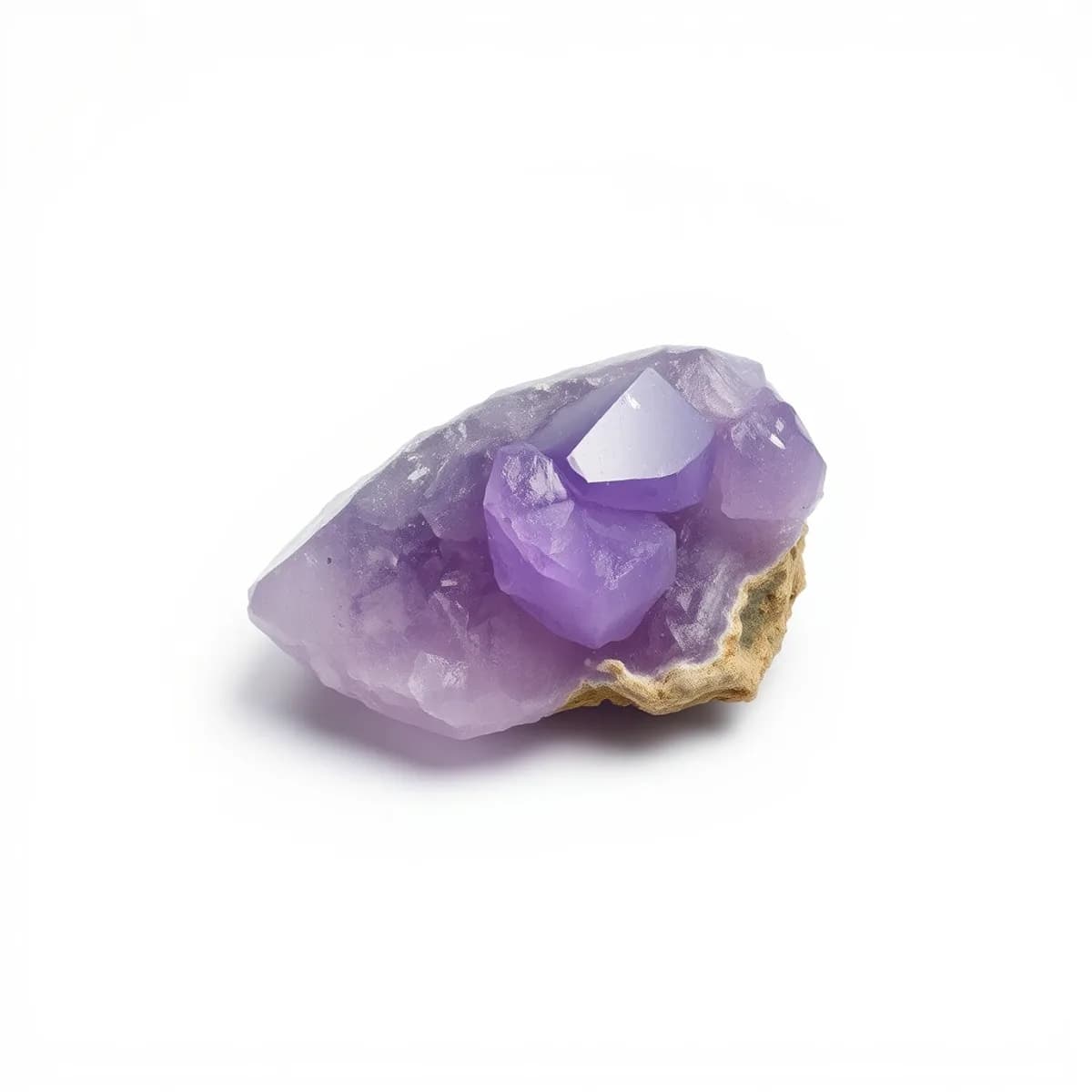
Amethyst, at Closer Range
The stone most people meet first. A slower look at where it comes from, why Brazilian and Uruguayan pieces look so different, and what sleep research can and cannot say about keeping one by the bed.

March Birthstone, Aquamarine and Bloodstone in Their Honest Tradition
The March birthstone is two stones, not one. Aquamarine for the modern calendar, bloodstone for the older one, and good reasons to know both.
Crystals for Love and Relationships, Traditional Companions
The stones paired with love across Hellenistic, Vedic, and European folk sources, and what each one actually supports. Written for self-compassion and relational work, not romantic manifestation.
Sit with us on Sundays.
One quiet letter every week. New writing, a crystal to consider, and whatever we have been thinking about. No tracking pixels, no affiliate noise.
By subscribing you agree to receive weekly emails from AU Crystals. Unsubscribe anytime. See our privacy note.