
September Birthstone, Sapphire the Velvet Blue of Wisdom
The September birthstone is sapphire, the deep blue corundum carried through medieval cloisters and royal regalia. A grounded guide to its colours, sources, meaning, and how to choose a piece worth keeping.

Quick facts3ShowHide
- ElementAir
- ZodiacVirgo, Libra
- Sits well withWisdom, faithful judgement, clear thinking
The September birthstone is sapphire, the deep blue variety of the mineral corundum, second in hardness only to diamond. Its tradition has held shape across Greek philosophy, medieval Christianity, royal regalia, and the modern engagement ring without losing the central thread: sapphire is the stone of considered wisdom and kept promises.
What is the September birthstone?
The September birthstone is sapphire. It sits on the modern birthstone list standardised by the American National Association of Jewelers in 1912, and on the older traditional European list that predates that standardisation by centuries. Both agree. September has been a sapphire month for a very long time.
The colour most people picture is the deep velvet blue of a clean Kashmir or Ceylon stone in good light. The mineral itself, corundum, comes in nearly every colour, and all of them except red are called sapphire. Red corundum is ruby. If a piece is sold as the September birthstone without further description, it will be blue sapphire. If you want yellow, pink, white, or padparadscha, you ask for the colour by name and you still get the same mineral.
Sapphire, the corundum September birthstone
Sapphire is corundum, crystalline aluminium oxide, with trace iron and titanium producing the blue. The same mineral with chromium produces ruby. Hardness sits at 9 on the Mohs scale, which makes sapphire second only to diamond among common gemstones and the most durable coloured stone in regular jewellery use.
That hardness is the practical reason sapphire has been chosen for rings worn every day for centuries. It does not scratch from contact with most household surfaces. A sapphire ring set well will outlast its setting by a wide margin and often outlast the wearer. Royal collections still hold sapphires that have been continuously worn since the medieval period.
Specific gravity sits around 4.0, giving sapphire a noticeable weight in the hand for its size. Refractive index is high, so a clean cut throws light cleanly without the glassy flatness of cheaper substitutes.
Sapphire colours beyond blue
Most September birthstones sold are blue, but the corundum family is wider than that. Stones in any colour other than red are grouped under the term fancy sapphires.
Yellow sapphire is coloured by iron and ranges from pale lemon to warm honey gold. Sri Lanka produces the most familiar yellow material.
Pink sapphire is coloured by trace chromium, the same element that produces ruby. The line between a pink sapphire and a pale ruby is a matter of saturation and is, in practice, decided by gemmological labs.
White sapphire is corundum without the trace elements that produce colour. A clean colourless stone, often used as a diamond substitute, though it lacks the dispersion that gives diamond its fire.
Padparadscha is the most prized fancy sapphire and one of the rarest gemstones in commercial jewellery. A delicate orange-pink, the colour of a tropical lotus flower, with a name from the Sinhalese word for that flower. Genuine padparadscha is almost entirely a Sri Lankan stone.
Red corundum is ruby, not sapphire, by long-standing convention. Mineralogically the two stones are identical except for the trace element producing the colour.
Sapphire sources
The geography of sapphire matters more than for most gemstones, because the source affects colour character in ways experienced buyers can read at a glance.
Kashmir sapphires, from the high Himalayan mining region first worked seriously in the 1880s, are the most prized blue corundum ever brought to market. The colour is a velvet cornflower blue, soft rather than sharp, with a slight milkiness from fine silk inclusions. The mines produced little material, then ran near-empty within decades. Genuine Kashmir sapphires now appear almost only at major auctions.
Sri Lanka, historically called Ceylon, has produced sapphires for over two thousand years and remains the most important active source for fine blue stones. Ceylon sapphires are typically a clean medium blue, sometimes leaning slightly violet, with excellent transparency. Most high-quality sapphires in modern jewellery are Sri Lankan.
Burma, now Myanmar, produces a deep royal-blue sapphire of high saturation, similar in tone to the best Kashmir material but typically more vivid and less velvety.
Madagascar has been a major source since the 1990s and now produces a substantial share of commercial sapphires, including strong blues and a particularly good output of pinks and yellows.
Australia produces a darker, often inkier blue sapphire from deposits in Queensland and New South Wales. Australian stones lean toward a very deep, slightly green-tinged blue, and they sit well in the Australian jewellery tradition for the obvious reason.
History of sapphire
Sapphire turns up in writing earlier than most coloured stones. The Greek sappheiros and the Latin sapphirus are older than reliable records of corundum mining itself, and there is good evidence that some classical references actually describe lapis lazuli, the older blue stone whose name partly carried over before mineralogy sorted the two.
By the high medieval period, sapphire had become the stone of the clergy. Bishops wore sapphire rings as a sign of office and a symbol of contemplative wisdom. The choice was theological: the deep blue was associated with the heavens, and corundum's hardness read as a metaphor for the steadfastness expected of a senior cleric. Many of these rings survive in cathedral treasuries.
Royal regalia took up the same stone. The British Crown Jewels include several historically significant sapphires, including the St Edward's Sapphire set in the Imperial State Crown, traditionally said to have been worn in a ring by Edward the Confessor in the eleventh century, and the Stuart Sapphire with its long provenance through the Stuart line.
The single piece of sapphire jewellery most familiar to modern audiences is the Diana sapphire engagement ring, a 12-carat oval Ceylon sapphire surrounded by diamonds, given to Diana, Princess of Wales, in 1981 and now worn by Catherine, Princess of Wales, who received it as her own engagement ring in 2010. The ring has done more for the popular profile of sapphire than any single stone since the medieval period.
September birthstone meaning and tradition
September in the northern hemisphere is the turn from summer into autumn, the month when the year stops expanding and begins to consolidate. In the southern hemisphere it is the opposite passage, the turn out of winter into spring. Either direction, September is a thresholded month, and sapphire's traditional meaning maps onto that turn.
The central thread is wisdom. Not raw intellect, but the slower, weighed judgement that comes from holding a question long enough for it to settle. Medieval lapidaries called sapphire the stone of considered counsel, and the trait carried into the modern association with the throat and third-eye chakras in crystal practice. Clear sight, careful speech, the courage to say what is actually true rather than what is easiest.
The second thread is fidelity. Sapphire became the engagement stone of choice in much of Europe long before diamond took the role in twentieth-century marketing. The hardness meant the stone would survive a marriage. The deep steady blue read as constancy. A promise made over a sapphire was a promise expected to keep its colour.
The third thread is honest judgement under pressure. Old courts gave sapphire seals and sapphire-set rings to magistrates for the same reason clergy wore them, as a reminder that the work of judging required steadiness rather than speed.
How to choose a sapphire
A few honest notes for buyers.
Heat treatment is standard. The vast majority of sapphires sold have been heat-treated to deepen colour and clarify the stone. Treatment is stable and accepted. Untreated stones of fine colour are rarer and command premiums that should be disclosed and certified.
Colour grading. For blue sapphire, the most prized tone is a deep velvety blue with high saturation and no greying or greening. Hold the stone in daylight, not under the warm spotlights of a jewellery case, which flatter every blue stone equally.
Cut quality. Sapphire's high refractive index rewards a careful cut. A well-cut stone returns light evenly across the face. A poorly cut one shows a dark window in the centre. A two-carat stone with excellent cut and colour will outshine a three-carat stone cut to maximise weight.
Lab-grown options. Synthetic sapphire has been produced commercially since 1902 by the Verneuil flame-fusion process. Modern hydrothermal and flux methods produce stones indistinguishable from natural corundum without lab testing. A lab-grown sapphire is mineralogically identical to a mined one, durable in exactly the same way, and priced a fraction of natural material.
September birthstone gift ideas
A short guide by intention rather than budget alone.
For a classic September gift. A small blue sapphire pendant or stud earrings in a simple silver or white gold setting. Corundum's hardness means the stone wears beautifully without fuss, and the deep blue suits most skin tones quietly.
For someone drawn to older traditions. Lapis lazuli, the deep blue stone of ancient Egypt and Mesopotamia, was often what classical writers actually meant when they said sappheiros. A lapis cabochon or a carved scarab piece sits closer to the original blue-stone tradition than a modern sapphire ring does, and the lapis lazuli complete guide covers the older lineage in full.
For an affordable matte alternative. Sodalite, often confused with lapis at a glance, has a similar deep blue with white veining and a softer, matte finish. It costs a fraction of either sapphire or lapis and reads particularly well as a tumbled pocket piece or a simple pendant. For a younger person born in September, sodalite is a thoughtful first crystal that carries the same wisdom thread.
For an engagement. Sapphire was the engagement stone of choice for centuries before diamond took the role, and it still works beautifully in that role. A medium-blue Ceylon stone in a classic six-prong setting will look as good in fifty years as it does the day it is given.
For broader context on the month's stones and traditions, the September birthstone page collects the dates, alternatives, and zodiac pairings in one place.
September birthstone and zodiac
September straddles two zodiac signs, and sapphire pairs sensibly with both.
Virgo (August 23 to September 22). Earth sign, ruled by Mercury, traditionally associated with discernment, careful analysis, and quiet competence. Sapphire's wisdom thread fits Virgo almost too neatly. The third-eye chakra association supports the Virgo tendency toward careful observation, and the stone's reputation for steadying judgement under pressure fits the sign's instinct to weigh evidence before speaking.
Libra (September 23 to October 22). Air sign, ruled by Venus, traditionally associated with balance, fairness, and considered relationship. Sapphire's older association with magistrates and honest judgement is essentially a Libran association. The fidelity thread, the engagement stone tradition, also pairs cleanly with Libra's Venus rulership and its concern with sustained partnership.
For people born on the Virgo-Libra cusp, the last days of September, sapphire is unusually well-fitted. Both signs ask the wearer to think clearly and to keep their word, and the stone has been associated with exactly those qualities for the better part of a thousand years.
The right September gift is the sapphire that fits the person, mined or lab-grown, blue or padparadscha, paired with a quieter alternative if the tradition is what matters more than the mineral. Knowing the stone, and what it carries, is most of the work.
Want a piece from this guide?
Until our shop is live, we hand-arrange orders through Instagram. Tap to ask what is currently available.
Preview the message
Hi AU Crystals,

I was reading your September Birthstone, Sapphire the Velvet Blue of Wisdom page (aucrystals.com/blog/september-birthstone-guide).

I wanted to ask about the stones in this guide.
A starter message gets copied to your clipboard. Paste it into the DM on Instagram.
A few honest questions.
What is the september birthstone?
The September birthstone is sapphire, the blue variety of the mineral corundum. It sits on both the modern and traditional birthstone lists, has done for centuries in European practice, and is associated with wisdom, faithful judgement, and promises kept.
Is sapphire always blue?
No. Sapphire is the gem name for any colour of corundum except red, which is called ruby. Blue is the most familiar and the one tied to the September tradition, but yellow, pink, white, green, and the rare orange-pink padparadscha are all genuine sapphires.
Are heat-treated sapphires real sapphires?
Yes. Heat treatment is a long-standing, stable, and accepted practice for sapphire. It deepens colour and improves clarity in stones that would otherwise be muddy. Untreated stones of fine colour are rarer and priced accordingly, but a heat-treated sapphire is still a real sapphire and wears the same way.
What is a good September birthstone gift?
A small blue sapphire pendant or stud earrings sit well in daily wear and last a lifetime, since corundum is hard enough that almost nothing scratches it. For someone drawn to older or softer stones, a lapis lazuli cabochon or a tumbled sodalite piece carries the same September wisdom thread at a gentler price.
Keep reading.
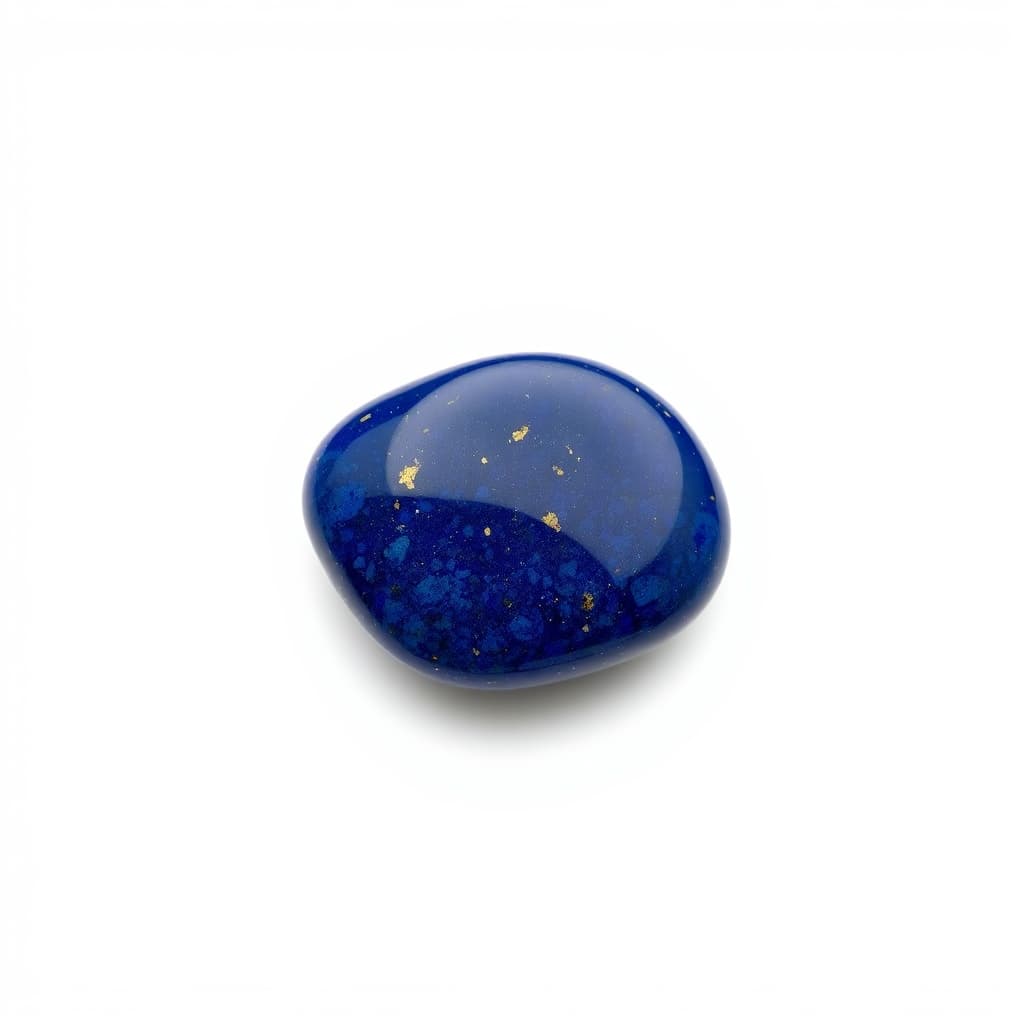
Lapis Lazuli, the Colour That Was Once Worth More Than Gold
Crushed, it was ultramarine, the most expensive pigment in the Renaissance. Worn, it was the stone of royalty across three thousand years. A careful look at what lapis actually is, where the real pieces come from, and how to read the pyrite.

March Birthstone, Aquamarine and Bloodstone in Their Honest Tradition
The March birthstone is two stones, not one. Aquamarine for the modern calendar, bloodstone for the older one, and good reasons to know both.

August Birthstone, Peridot the Olive-Green Gem of Late Summer
The August birthstone is peridot, a gem-quality olivine that holds its glow into the evening. A careful look at the stone, its sources, and why some peridot fell from the sky.
Mentioned in
Sit with us on Sundays.
One quiet letter every week. New writing, a crystal to consider, and whatever we have been thinking about. No tracking pixels, no affiliate noise.
By subscribing you agree to receive weekly emails from AU Crystals. Unsubscribe anytime. See our privacy note.