
June Birthstone, Pearl Moonstone and Alexandrite in Quiet Detail
June carries three birthstones, pearl, moonstone, and alexandrite. A careful guide to what each one is, what they mean, and how to choose well.

Quick facts11ShowHide
- ChakraCrown, Third Eye
- Mohs hardness2.5 (pearl) to 8.5 (alexandrite)
- Mineral familyOrganic biomineral, Feldspar, Chrysoberyl
- OriginWorldwide (pearl), Sri Lanka and India (moonstone), Russia, Brazil, India (alexandrite)
- ColourWhite and cream (pearl), white and rainbow (moonstone), green to red (alexandrite)
- ElementWater
- ZodiacGemini, Cancer
- Sits well withIntuition, calm, lunar reflection
- Water safePearl no, moonstone with care, alexandrite yes
- Sun safeYes
- RarityPearl common, moonstone common, alexandrite very rare
June is the month with the softest birthstones in the calendar. Where April gets diamond and July gets ruby, June gets pearl, moonstone, and alexandrite, three stones that share a quiet, almost lunar quality even though they come from completely different parts of the natural world. One is grown by a living animal. One is a feldspar that holds light like fog. One is a rare chrysoberyl that changes colour depending on the lamp you stand under. This is a careful guide to all three.
What is the June birthstone?
The June birthstone is pearl, moonstone, or alexandrite. Modern birthstone lists assign all three to anyone born between 1 June and 30 June, and any of them counts as a proper June piece. Pearl is the oldest and most traditional answer. Moonstone is the romantic, intuitive choice. Alexandrite is the rare and expensive one, added to the list in 1952 because pearl is so soft that it does not survive everyday rings. If someone asks what is the June birthstone in conversation, pearl is usually the safest single answer, with moonstone and alexandrite mentioned alongside it.
Pearl, the original June birthstone
Pearl is not a crystal in the strict mineralogical sense. It is an organic biomineral, grown inside a living mollusc as a defensive response to an irritant. Layer after layer of nacre, which is mostly calcium carbonate held together by a protein called conchiolin, is laid down around a foreign particle. The result is the soft luminous bead that has been worn as jewellery for at least four thousand years.
Four pearl families dominate modern jewellery.
Akoya pearls come from the Pinctada fucata oyster, mostly cultured in Japan. They are small, very round, and have the bright clean lustre most people picture when they hear the word pearl.
Freshwater pearls are grown in mussels in lakes and rivers, mainly in China. They are the most affordable, come in soft creams and pastels, and have become the everyday pearl of the modern wardrobe.
Tahitian pearls grow in the black-lipped Pinctada margaritifera oyster around French Polynesia. They are naturally dark, ranging through grey, peacock, aubergine, and deep green.
South Sea pearls, from the Pinctada maxima oyster in the waters off northern Australia, Indonesia, and the Philippines, are the largest commercial pearls. They are warm white to gold, and the finest pieces sit at the top of the pearl market.
Until the early twentieth century, every pearl in jewellery was a wild pearl, found by chance. Kokichi Mikimoto in Japan perfected the cultured pearl process around 1916, and within a generation almost all jewellery pearls were farmed. The trade calls them cultured rather than synthetic, because the pearl is grown by a real oyster from real nacre. Only the seed is human.
Pearl is soft, only 2.5 to 4.5 on the Mohs scale, and sensitive to acids, perfumes, and household cleaners. A pearl necklace worn over a lifetime needs occasional restringing. This softness is exactly why the gem trade later wanted a harder June birthstone.
Moonstone, the imaginative June birthstone
Moonstone is a variety of the mineral feldspar, specifically the orthoclase and albite branches. The thing that makes it moonstone, rather than ordinary feldspar, is a thin internal layering of two slightly different feldspars. Light enters the stone, scatters across those microscopic layers, and emerges as a soft floating sheen that drifts as you tilt the piece. The optical effect has its own name, adularescence, after Mount Adular in Switzerland where early specimens were studied.
Good moonstone looks almost wet in the right light, as though someone trapped a small cloud inside a colourless bead. The most prized stones come from Sri Lanka, where rounded cabochons show a clean blue sheen on a near-transparent body. Indian moonstone is also widely traded and tends toward peach, grey, or rainbow flashes on a milkier base.
Moonstone has been associated with the moon for as long as it has been worn. Roman writers thought it was solidified moonlight. Hindu tradition treats it as a sacred lunar stone, and rainbow moonstone in particular is still given as a wedding gift in parts of India for fertility and harmony. In modern crystal practice, moonstone is the stone of intuition, dream work, and lunar feminine wisdom, and pairs naturally with the moonstone complete guide and the moonstone product page for anyone choosing a piece.
Moonstone is harder than pearl, around 6 to 6.5 on the Mohs scale, but it has cleavage planes and can chip if knocked against a hard surface. It is fine in earrings and pendants, and reasonable in rings if the setting protects the stone.
Alexandrite, the rare colour-change June birthstone
Alexandrite is a colour-change variety of chrysoberyl, BeAl2O4. The colour change is not a trick of polish or coating, it is a real optical property of the stone. Alexandrite contains trace chromium in place of some aluminium, and chromium has the unusual habit of absorbing light in a narrow yellow band right in the middle of the visible spectrum. In daylight, which is rich in blue and green wavelengths, the eye sees the stone as green or blue-green. Under warm incandescent or candlelight, which is rich in red, the same stone reads as raspberry red or purple.
Old gem dealers had a phrase for it. Emerald by day, ruby by night.
Alexandrite was discovered in 1830 in the emerald mines of the Russian Urals, near the Tokovaya river, and was named after the future Tsar Alexander II, who came of age the same year. The fact that the stone changed between Russia's imperial colours, green and red, made it instantly fashionable in the Russian court. The original Russian deposits were small, and most were exhausted within a few decades.
Modern alexandrite comes mainly from Brazil (the Hematita mine in Minas Gerais opened in the 1980s and produced the finest stones since the Russian originals), Sri Lanka, India, and East Africa. Even so, gem-quality alexandrite with strong colour change in stones above one carat is extremely rare, which is why fine pieces routinely sell for more per carat than diamond. Most jewellery alexandrite under five hundred dollars is synthetic, grown in a laboratory by the Czochralski or flux process. Synthetic alexandrite is real chrysoberyl with real colour change. It is just grown by humans, and should always be disclosed as lab-grown.
Alexandrite is hard, 8.5 on the Mohs scale, and tough enough for daily ring wear.
Why June has three birthstones
Pearl was the original June birthstone for as long as anyone can document, included in early Polish lists, in eighteenth century European tradition, and in the first standardised modern list published by the American National Association of Jewelers in 1912. That 1912 list also added moonstone as an alternative for June, partly because moonstone was fashionable in the Art Nouveau jewellery of the period and partly because it gave buyers a non-organic option.
In 1952, the American Gem Society revised the list and added alexandrite to June. The reasoning was practical. Pearl is too soft for a daily-wear ring, moonstone is fragile, and the trade wanted a hard, faceted, properly gemmy June stone for engagement pieces. Alexandrite, although rare, fitted the brief. The three-stone arrangement has stuck ever since.
This is also why you will see different answers depending on which jeweller you ask. Older European lists often give only pearl. American lists since 1952 give all three. The British National Association of Goldsmiths follows the modern American list. For practical purposes, all three are correct.
June birthstone meaning and symbolism
The June birthstones share a temperament. Where ruby is heat and emerald is depth, the June stones are softness, inwardness, and light that comes from inside the stone rather than off the surface. Pearl is grown in water. Moonstone holds water inside it visually. Alexandrite seems to hold two states of itself at once.
Pearl carries meanings of purity, patience, and a kind of slow accumulated wisdom. Layer by layer, year by year. The meaning matches the way the stone is made.
Moonstone carries intuition, dream wisdom, and traditional feminine lunar associations across many cultures. It is the stone people reach for during transitions, particularly hormonal ones, and during quiet practices like journalling or meditation.
Alexandrite carries adaptability and balance. The stone literally changes its expression depending on the light around it, and the modern reading is that it represents a kind of emotional flexibility, holding two truths at once.
June in the Northern Hemisphere is midsummer. The longest day, the gentlest light, the sense of pause before the season turns. The June stones suit that quality. None of them shouts. All of them glow.
How to choose a June birthstone piece
Pearl. Look for clean lustre above all else. A good pearl reflects sharp images of the light source, not blurry ones. Surface should be smooth, with minimal blemishes. Roundness matters for classical strands, but baroque and irregular pearls have their own beauty and cost less. Akoya for traditional white, freshwater for everyday, Tahitian for dark, South Sea for special pieces.
Moonstone. The flash matters more than the body. A bright blue adularescence on a clean translucent base is the top grade. Avoid stones that look chalky or dead from the side. Cabochon cut shows the sheen best.
Alexandrite. The single most important factor is colour change, ideally bluish-green to purplish-red, with strong saturation in both states. Take any candidate stone outside in daylight, then under a warm bulb, and compare. Weak change at any price is a poor buy. Lab-grown alexandrite is honest and beautiful and costs a fraction of natural, just confirm in writing that it is synthetic.
June birthstone gift ideas
For the classical recipient, give pearl. A simple freshwater strand or a pair of akoya studs reads as grown-up and considered. It will date slowly and travel well.
For the modern, intuitive recipient, give moonstone. A blue-flash Sri Lankan cabochon set in silver, or a rainbow moonstone pendant, sits closer to the contemporary crystal aesthetic. It pairs naturally with practices like journalling or meditation.
For the luxury or milestone gift, give alexandrite. A small natural alexandrite, even half a carat, is a serious heirloom piece. A larger lab-grown alexandrite gives the same colour change for a fraction of the budget, and is honest jewellery, not a fake. Either reads as the considered, slightly unusual choice.
For a complete browse of June options together, the June birthstone page gathers all three.
June birthstone and zodiac
June overlaps two signs.
Gemini, 21 May to 20 June, is the air sign of communication, curiosity, and a quick mind. Moonstone suits Gemini particularly well, balancing the busyness with reflective inward attention. Pearl is also a quiet, calming pairing.
Cancer, 21 June to 22 July, is the cardinal water sign of home, intuition, and feeling. All three June birthstones suit Cancer, but the deepest fit is moonstone, the lunar stone for the moon-ruled sign. Pearl, with its watery origins, is also a natural Cancer piece.
If you are buying for someone born in the last week of June, the safest and loveliest pick is moonstone. It honours both signs, suits both temperaments, and carries the soft June quality without either the cost of alexandrite or the fragility of pearl.
Want a piece from this guide?
Until our shop is live, we hand-arrange orders through Instagram. Tap to ask what is currently available.
Preview the message
Hi AU Crystals,

I was reading your June Birthstone, Pearl Moonstone and Alexandrite in Quiet Detail page (aucrystals.com/blog/june-birthstone-guide).

I wanted to ask about the stones in this guide.
A starter message gets copied to your clipboard. Paste it into the DM on Instagram.
A few honest questions.
What is the June birthstone?
June has three modern birthstones, pearl, moonstone, and alexandrite. Pearl is the oldest and most traditional. Moonstone is the romantic, lunar choice. Alexandrite is the rare colour-change stone added in 1952.
Why does June have three birthstones?
Pearl is ancient. Moonstone joined the modern list when the American National Association of Jewelers standardised birthstones in 1912. Alexandrite was added by the American Gem Society in 1952 to give buyers a harder, faceted alternative to soft pearl.
Is pearl really a crystal?
Strictly, no. Pearl is an organic biomineral grown by molluscs from layered nacre, which is calcium carbonate plus a protein binder. It is included in crystal and birthstone traditions because of its long jewellery history and luminous quality.
What is alexandrite and why is it expensive?
Alexandrite is a rare colour-change variety of the mineral chrysoberyl. It reads green in daylight and red under warm incandescent light. Natural stones with strong colour change are scarce, which is why fine alexandrite outprices most coloured gems by weight.
Keep reading.
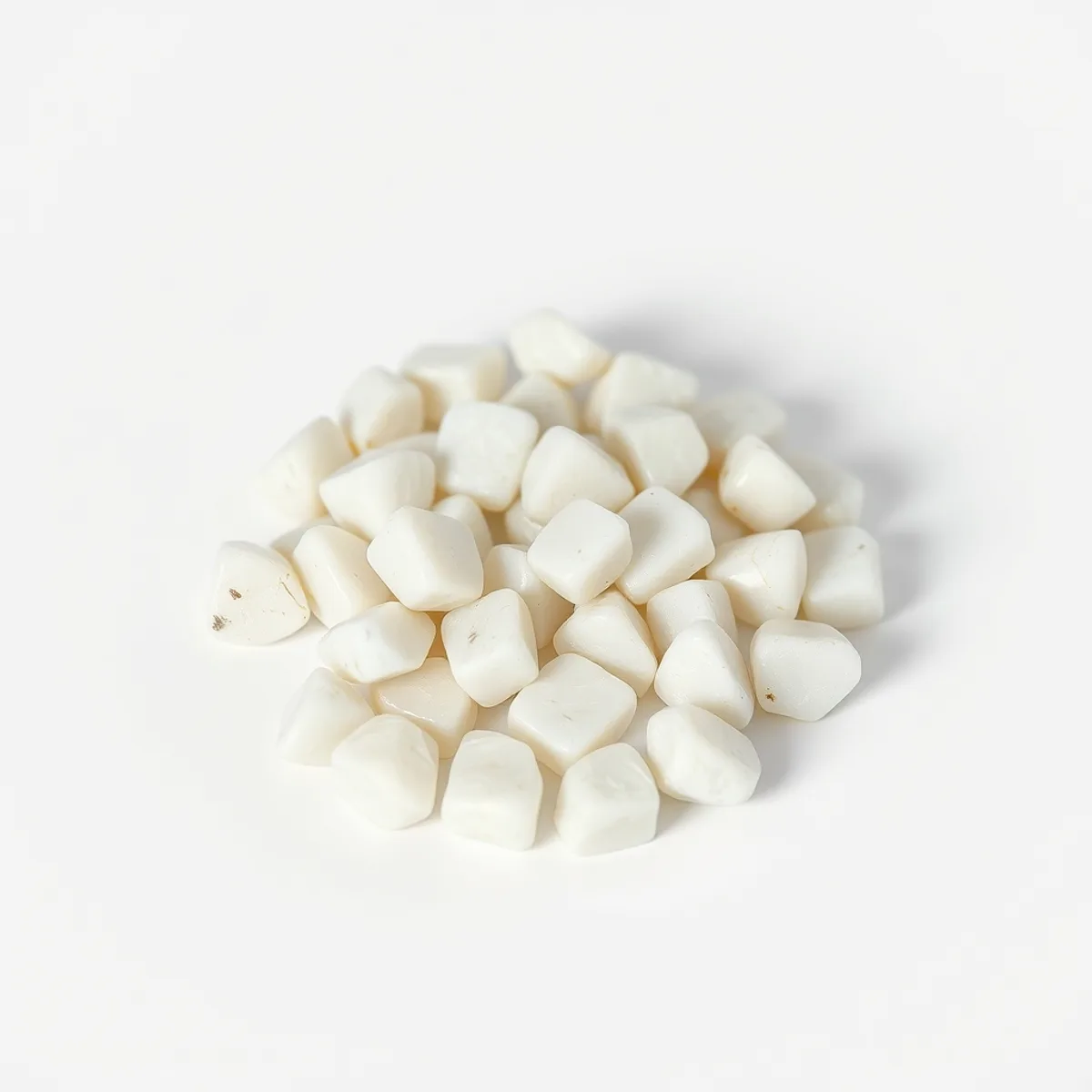
Moonstone, and the Soft Kind of Strength
A stone that glows from the inside in the right light. Where adularescence comes from, why rainbow and blue moonstone are different creatures, and the long tradition of carrying one during change.
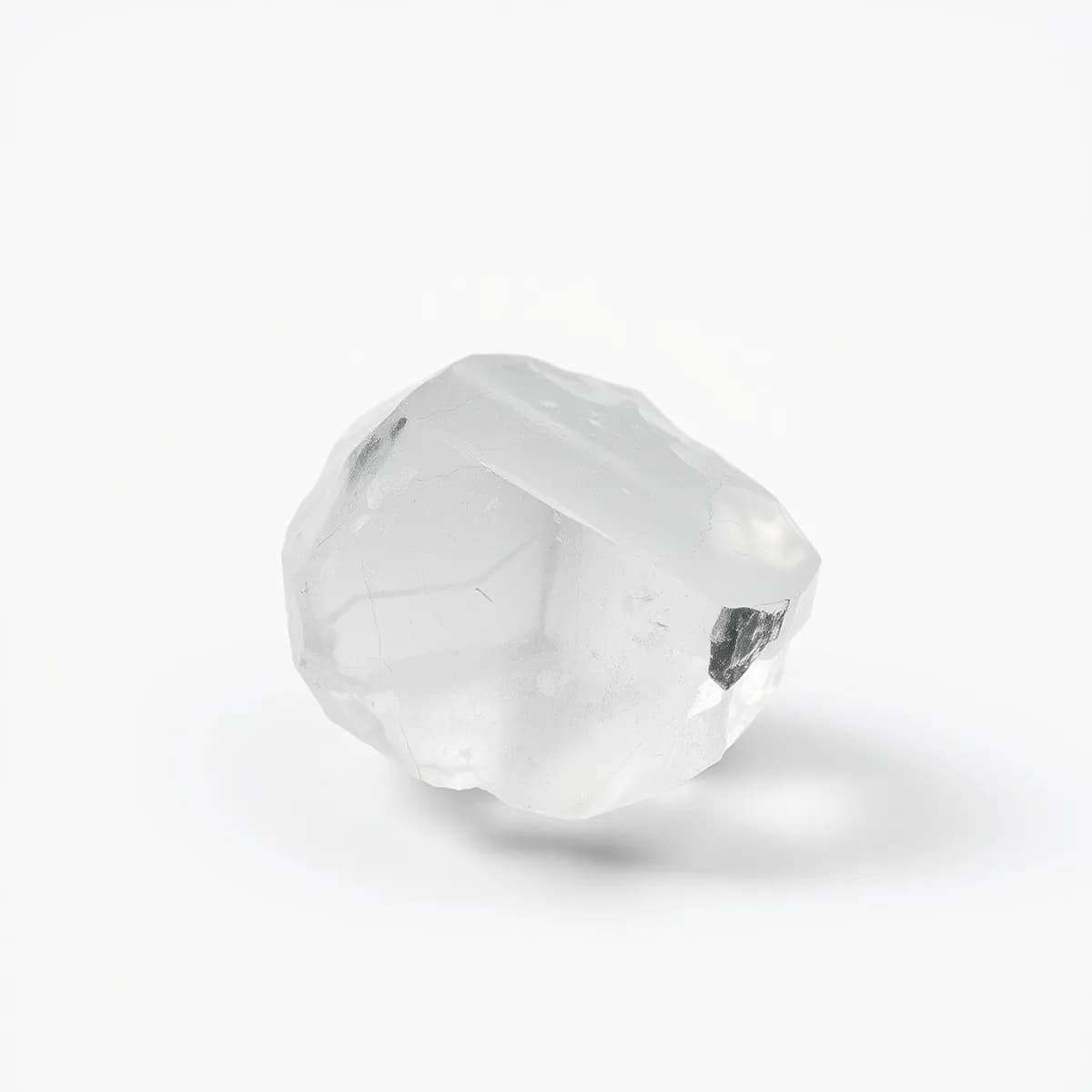
Clear Quartz, the One That Does a Bit of Everything
Called the master healer in tradition and used in nearly every radio and watch in the twentieth century. A look at what clear quartz actually is, how it earned its reputation, and why it gets recommended for almost everything.
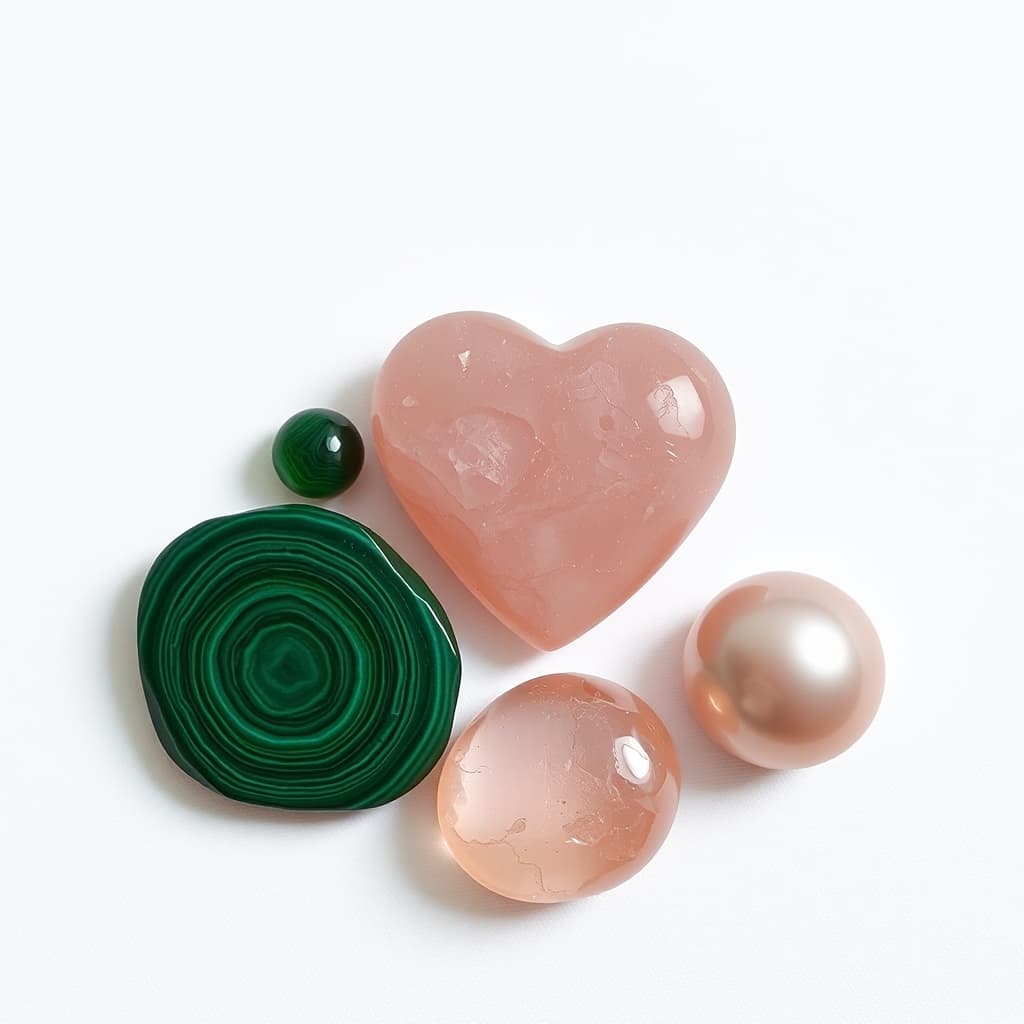
Crystals for Love and Relationships, Traditional Companions
The stones paired with love across Hellenistic, Vedic, and European folk sources, and what each one actually supports. Written for self-compassion and relational work, not romantic manifestation.
Sit with us on Sundays.
One quiet letter every week. New writing, a crystal to consider, and whatever we have been thinking about. No tracking pixels, no affiliate noise.
By subscribing you agree to receive weekly emails from AU Crystals. Unsubscribe anytime. See our privacy note.