
July Birthstone, Ruby and the Quiet Authority of Red Stones
The July birthstone is ruby, the red corundum that has held its place in royal courts and modern jewellery cases for two thousand years. A careful guide to the stone and its alternatives.

Quick facts3ShowHide
- ElementFire
- ZodiacCancer, Leo
- Sits well withVitality, courage, protective passion
The July birthstone is ruby, the red variety of corundum and one of the four classical precious stones alongside diamond, sapphire, and emerald. Ruby has sat in royal regalia and modern jewellery cases for the better part of two thousand years, and the reasons it has held its place are mostly mineralogical, not mystical.
What is the July birthstone?
The July birthstone is ruby, listed on both the modern and traditional birthstone calendars. There is no second stone competing for the slot, the way March carries aquamarine and bloodstone, or June carries pearl and moonstone. July is ruby, cleanly, and it has been ruby for long enough that the tradition predates any single calendar.
What changes between calendars is the alternative palette. Modern jewellers sometimes offer carnelian as a softer warm-red option for July, and traditional lapidary writing sometimes lists red garnet as a working substitute when ruby was unavailable. Neither displaces ruby. They are companion stones for the season, useful when budget, scale, or temperament asks for something gentler.
Ruby, the corundum family July birthstone
Ruby is a variety of corundum, the crystalline form of aluminium oxide. The same mineral, with different trace elements, produces sapphire in every colour other than red. The red comes from chromium substituting for aluminium in the crystal lattice, the same mechanism that colours emerald green inside the beryl family. Chromium concentration of around one percent gives the strongest red. Push it higher and the stone fluoresces so intensely under daylight that the red appears to glow from within.
Hardness sits at 9 on the Mohs scale, second only to diamond. Ruby handles daily wear in rings, bangles, and pendants without anxiety, which is part of why it became the stone of choice for crown jewels and signet rings. Most stones in royal regalia have been replaced once or twice in their settings. Rubies are usually still the originals.
The trade benchmark for top colour is "pigeon-blood" red, a Burmese expression for a vivid, slightly bluish red with strong fluorescence. Stones meeting that standard from the Mogok Valley in Myanmar set price records at auction. The term is now used for material from other sources that meets the same profile, but the original reference is Mogok.
Ruby vs sapphire vs spinel
The three stones are easy to confuse, and the confusion runs back centuries.
Ruby and sapphire are the same mineral. Corundum coloured red by chromium is ruby. Corundum coloured any other way is sapphire. A pink corundum sits on the boundary, and the trade has argued for decades about where the line falls. Most laboratories now classify deep pink corundum as pink sapphire and reserve ruby for stones with a saturated red hue.
Spinel is a different mineral, magnesium aluminium oxide, with its own crystal structure. Red spinel looks nearly identical to ruby and historically was almost always sold as ruby. The famous Black Prince's Ruby set in the Imperial State Crown of England is, in fact, a 170 carat red spinel. The Timur Ruby is another spinel. The mineralogical distinction was not made until the 1780s, by which point the great red stones of Europe and the Mughal court had been called rubies for centuries.
For a buyer today, the distinction matters because spinel is rarer than ruby in saturated red but historically priced lower. A clean natural red spinel can be a better stone than a heavily treated ruby at the same price point.
Ruby sources
Most rough enters the trade from a small number of regions, each with a recognisable signature.
Burma (Myanmar), Mogok Valley. The classical source. Mogok rubies show the strongest fluorescence and the cleanest pigeon-blood red, and continue to set the top of the market. Sanctions and supply chain ethics complicate the modern trade. Buyers seeking Burmese material should ask for documented provenance.
Mozambique, Montepuez. The dominant modern commercial source since major deposits were developed from 2009 onward. Mozambican rubies span a wide quality range. The best Montepuez stones rival Burmese material at the top end, and the mid-range supply is what sits in most contemporary fine jewellery cases.
Sri Lanka. Produces lighter rubies, often pinkish, sometimes called Ceylon rubies. Cleaner clarity than most Burmese material. Many older stones in European jewellery are Sri Lankan in origin.
Thailand. Bangkok remains the global heat-treatment and trading centre for ruby, even though local mines are now largely worked out. Thai rubies historically tended toward a darker, slightly brownish red. Most rough from any source still passes through Thai cutters and treaters at some point.
Smaller production also comes from Madagascar, Tanzania, and Vietnam.
History of ruby
Ruby's place in the gemstone hierarchy is older than most cultural memory of it. Sanskrit texts from the early centuries of the common era list ruby as ratnaraj, "king of gems", and ratnanayaka, "leader of gems", above sapphire and emerald. The classification carried through the Mughal courts, where ruby and spinel both circulated under the same Persian term and where the great red stones of the imperial collection were assembled.
In medieval Europe, ruby sat at the top of the four cardinal gems alongside diamond, sapphire, and emerald. Crown jewels accumulated red stones with a steady preference. The Black Prince's Ruby came to the English crown in 1367. The Timur Ruby was inscribed by successive Mughal emperors before being presented to Queen Victoria in 1851. Neither is, mineralogically, a ruby, but both are central to a tradition that did not yet distinguish red corundum from red spinel.
Burmese tradition held that ruby protected its wearer in battle, an idea reinforced by warriors inserting small rubies under the skin before combat. The practice is documented in Burmese chronicles and survived into the colonial period.
Cambodian and Indian traditions associated ruby with the sun, the heart, and the fire of life. Vedic astrology assigns ruby to the sun and prescribes it for strengthening leadership and vitality. Pre-electric cultures across the Indian Ocean trade reached the same symbolic conclusions independently.
July birthstone meaning and tradition
July is the height of summer in the northern hemisphere, the depth of winter in the southern. Birthstone tradition is northern in origin, and ruby maps onto July through the heat-of-the-year logic that runs through most of the calendar. The colour reads as concentrated sunlight. The hardness reads as something that lasts through the season's intensity rather than fading.
The traditional associations cluster around three threads.
Vitality. Ruby has been a vitality stone for as long as anyone has written about gemstones. The Vedic association with the sun, the medieval European tradition of ruby as a circulation strengthener, and the Burmese protective tradition all share the same underlying picture: a stone whose colour is the colour of blood and fire, and whose presence is meant to shore up the wearer's life force.
Leadership. "King of gems" is not an empty compliment. Ruby was historically the stone of authority, preferred by figures who needed to project decisive presence rather than reflective grace. Modern crystal practice keeps the thread, associating ruby with the root chakra for grounded confidence and the heart chakra for protective warmth.
Protective passion. The ruby tradition is not gentle. Where moonstone or aquamarine carries softness, ruby carries heat. The historical wearer was protected by the stone's energy rather than soothed by it. For a person born in July, particularly a person stepping into a leadership role or a season of high demand, the symbolism still holds.
For the broader ritual context, the July birthstone page collects the dates, traditions, and stones in one place.
How to choose a ruby
A few honest notes for buyers.
Heat treatment is standard. Almost every ruby on the open market has been heat-treated to improve colour and clarity. The treatment is permanent, accepted, and disclosed at every reputable level of the trade. An unheated ruby with strong colour commands a significant premium and should arrive with laboratory documentation, ideally from GRS, Gübelin, or SSEF.
Avoid glass-filled rubies unless disclosed. Lower-grade ruby rough is sometimes treated with lead glass to fill internal fractures, producing a stone that looks vivid in the case but degrades quickly under heat, ultrasonic cleaning, or jewellers' torches during repair. The treatment is legitimate at fashion-jewellery price points if disclosed. It becomes a problem when sold as a standard heated ruby at a premium.
Lab-grown ruby is a real option. Synthetic ruby has been produced by the Verneuil flame-fusion process since 1902 and by flux growth methods since the 1960s. The mineralogy is identical to natural ruby. Modern flux-grown stones are visually indistinguishable from fine natural material and cost a fraction of the price. For a buyer who wants the colour and durability without the provenance complications, lab-grown is an honest answer.
Colour over size. A small ruby with strong saturated colour outperforms a large pale stone visually in every setting. The trade prices accordingly. A 0.5 carat pigeon-blood stone often sits above a 2 carat pinkish stone at the same retailer.
Care. Ruby is hard but not indestructible. The stone is sensitive to sudden temperature change. Avoid ultrasonic cleaning on heavily included or fracture-filled stones. Mild soap, warm water, and a soft brush are enough for almost all pieces.
July birthstone gift ideas
A short guide by intention rather than by price alone.
For someone with classical taste. A small natural heated ruby, set as a stud or a solitaire pendant. The stone reads quietly powerful in a simple setting and outlives the trends.
For someone drawn to warm colour at a gentler price. Carnelian cabochons or beads. A warm orange-red chalcedony that sits well against most skin tones and carries its own tradition of vitality. The full background is in the carnelian complete guide.
For someone who wants depth without the ruby price tag. Red garnet, specifically almandine or pyrope. Hardness of 7 to 7.5, durable enough for daily wear, and a wine-red colour that reads richer than ruby in low light.
For a person born in July who already has ruby. A red spinel piece, deliberately. The stone is rarer than ruby in fine quality and carries the historical depth of the great red stones of the Mughal and European courts.
July birthstone and zodiac
July straddles two zodiac signs, and ruby pairs sensibly with both.
Cancer (June 21 to July 22). Water sign, ruled by the Moon, traditionally associated with emotional depth and protective instinct. Ruby pairs as a warming counterweight. Cancer is often more comfortable absorbing than projecting, and ruby supports stepping forward without losing the underlying tenderness. Carnelian works similarly at a gentler intensity.
Leo (July 23 to August 22). Fire sign, ruled by the Sun, traditionally associated with warmth and the natural ease of being seen. Ruby is the obvious primary pairing, and Vedic tradition makes the link explicit by assigning ruby to the Sun. Red garnet sits as a quieter companion when ruby feels like too much.
For people born on the Cancer-Leo cusp, the last days of July, the doubling makes sense. Ruby holds both signs from different angles, the sun-warming for Cancer and the sun-affirming for Leo.
The right July birthstone is the one that fits the person rather than the chart. Ruby is the answer the calendar gives. Carnelian and garnet are the answers when ruby is wrong for the moment or the budget. Knowing all three is most of the work.
Want a piece from this guide?
Until our shop is live, we hand-arrange orders through Instagram. Tap to ask what is currently available.
Preview the message
Hi AU Crystals,

I was reading your July Birthstone, Ruby and the Quiet Authority of Red Stones page (aucrystals.com/blog/july-birthstone-guide).

I wanted to ask about the stones in this guide.
A starter message gets copied to your clipboard. Paste it into the DM on Instagram.
A few honest questions.
What is the July birthstone?
The July birthstone is ruby. It has held the position on both the modern and traditional birthstone lists for centuries, prized for its deep red colour, its hardness at 9 on the Mohs scale, and its long association with vitality, courage, and royal authority.
Why is ruby the birthstone for July?
Ruby has been linked to the heat of high summer for as long as birthstone traditions have existed in Europe, India, and the Middle East. The colour reads as concentrated sunlight, the stone is durable enough for daily wear, and the symbolism of the fire of life sits naturally with a month most cultures associate with peak energy.
Are there alternatives to ruby for a July birthstone gift?
Yes. Carnelian is a warm orange-red chalcedony that fits the season at a far gentler price point and reads beautifully in cabochon form. Red garnet, particularly almandine or pyrope, gives a deep wine-red colour with high durability. Both are honest alternatives rather than substitutes.
Is a treated ruby still a real ruby?
Yes. Heat treatment is the industry standard for ruby and is accepted at every price point. The stone remains genuine corundum, the colour is permanent, and the value reflects the treatment honestly. Glass-filled rubies are a different category and should be avoided unless disclosed and priced as fashion pieces.
Keep reading.
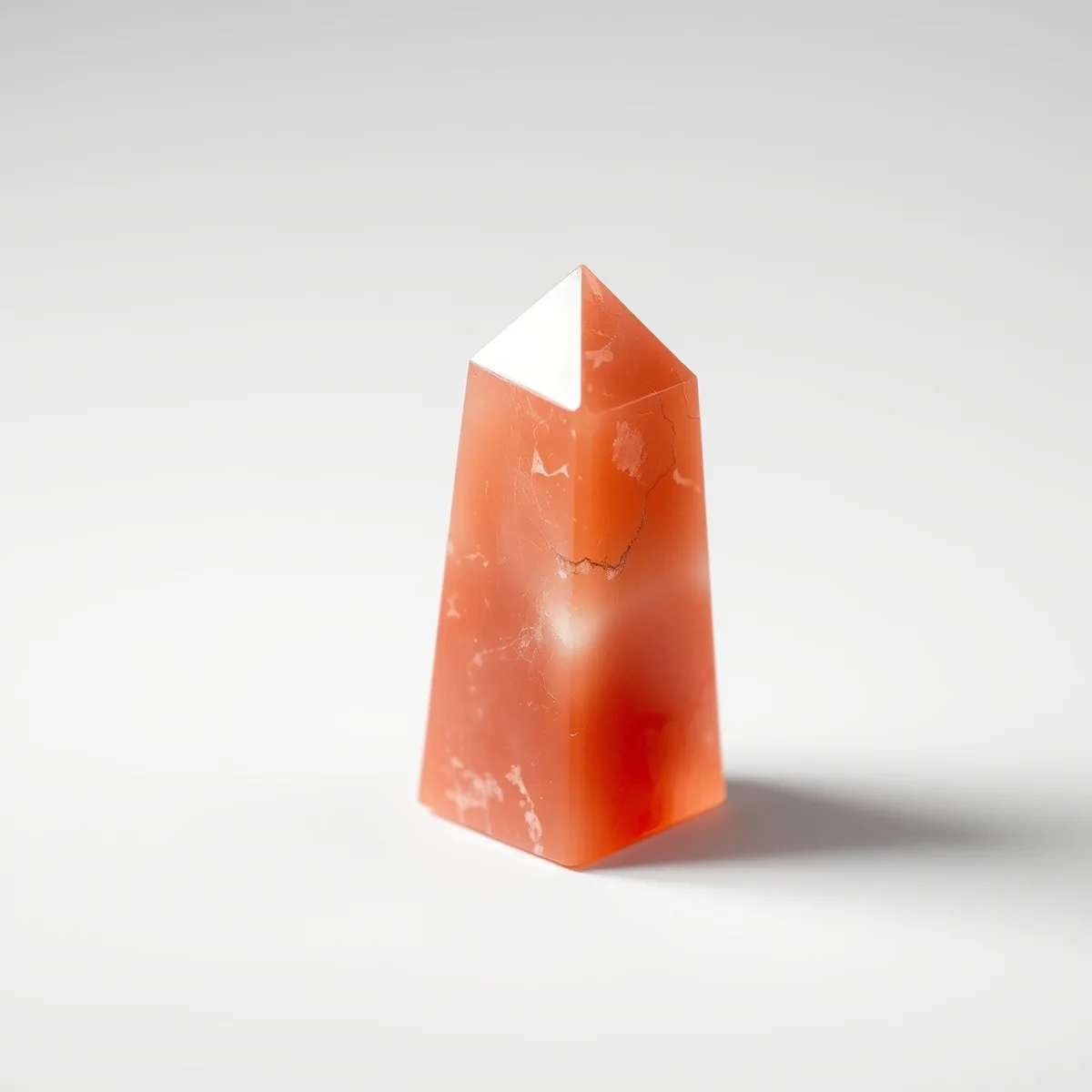
Carnelian, the Warm Stone That Gets You Moving
Red orange chalcedony that shows up on ancient jewelry, Roman signet rings, and Egyptian burial goods. Why the stone has been associated with courage for three thousand years, and what the heat treatment question means for modern buyers.

March Birthstone, Aquamarine and Bloodstone in Their Honest Tradition
The March birthstone is two stones, not one. Aquamarine for the modern calendar, bloodstone for the older one, and good reasons to know both.

August Birthstone, Peridot the Olive-Green Gem of Late Summer
The August birthstone is peridot, a gem-quality olivine that holds its glow into the evening. A careful look at the stone, its sources, and why some peridot fell from the sky.
Mentioned in
Sit with us on Sundays.
One quiet letter every week. New writing, a crystal to consider, and whatever we have been thinking about. No tracking pixels, no affiliate noise.
By subscribing you agree to receive weekly emails from AU Crystals. Unsubscribe anytime. See our privacy note.