
Jade, the Stone of Long Cultivation
A green stone that is actually two minerals (nephrite and jadeite) carrying three thousand years of continuous use across Chinese, Mesoamerican, and Maori tradition. The mineralogy, the symbolic depth, and how to choose well in a market full of imitations.
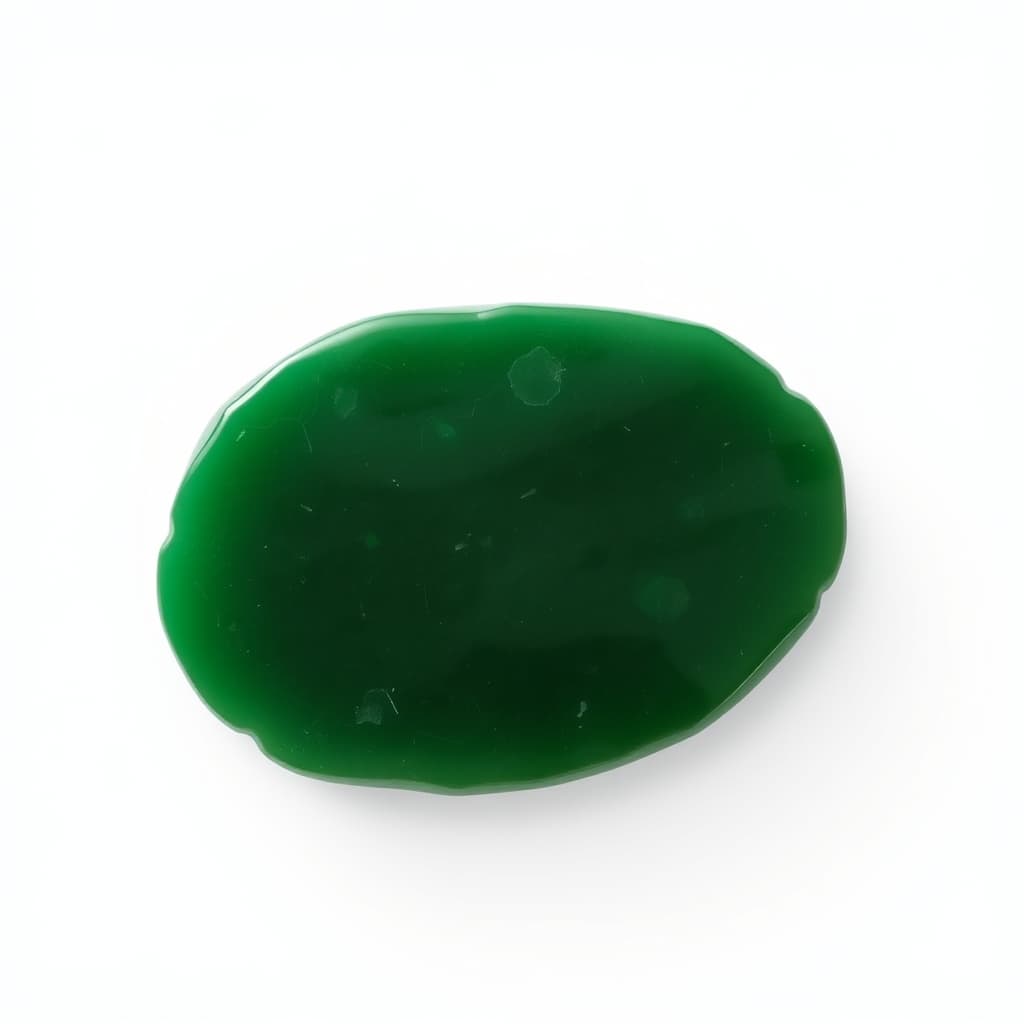
Quick facts11ShowHide
- ChakraHeart (Anahata), Root (Muladhara)
- Mohs hardness6 to 7 (jadeite), 6 to 6.5 (nephrite)
- Mineral familyJadeite (pyroxene) or Nephrite (amphibole)
- OriginBurma (jadeite), China/Russia/Canada/New Zealand (nephrite)
- ColourPale to deep green, white, lavender, yellow, red (rare)
- ElementEarth, Water
- ZodiacTaurus, Libra, Pisces
- Sits well withLong-term cultivation, abundance, ancestral connection
- Water safeYes
- Sun safeYes
- RarityCommon in lower grades, gem jadeite extremely rare
Jade is the most culturally loaded crystal in this catalogue, carrying three thousand years of continuous use across Chinese, Mesoamerican, and Maori tradition. It is also the most often misunderstood, partly because what we call jade is actually two distinct minerals, and partly because the market for jade is one of the most extensively faked in the gemstone world. This guide walks through the nephrite-jadeite distinction, the three traditional cultures that elevated jade to sacred status, and honest buying advice for a stone where the difference between real and fake can mean a tenfold price difference.
What it actually is, twice
Jade is the trade name for two mineralogically distinct stones with similar appearance and overlapping traditional use.
Nephrite is calcium magnesium iron silicate, technically a fibrous variety of the amphibole minerals tremolite and actinolite. It is the older Chinese jade, used in China for at least 6,000 years across the Hongshan, Liangzhu, Shang, and Zhou cultures. Nephrite tends toward pale green, creamy white (often called mutton fat jade), and grey-green. It is found across Russia, Canada (specifically British Columbia), New Zealand, and Western China.
Jadeite is sodium aluminium silicate, a pyroxene mineral with a different crystal structure. It is the Burmese jade that became prized in Qing dynasty China (from the 18th century onward) and reaches its highest expression in vivid translucent emerald-green pieces called imperial jade. Jadeite is harder, denser, and more visually dramatic than nephrite, but most historic Chinese jade carvings are nephrite.
Both are real jade. Both carry similar symbolic associations. The distinction matters for buying (jadeite is more expensive and more often faked) and for connoisseurship, but in traditional practice, both serve the same role.
The three traditions
Jade is unusual among crystals for having three completely independent sacred traditions across cultures that did not contact each other.
Chinese tradition
Jade has been the most prized stone in Chinese culture for at least three thousand years. Confucian tradition specifically pairs jade with the virtues of cultivated character: benevolence, righteousness, wisdom, courage, and integrity. The classic Chinese saying junzi bi de yu yu translates roughly as "the noble person should always wear jade," meaning the person who has cultivated virtue should be marked by it as deliberately as one wears a stone.
Jade in this tradition is not a wealth-attraction stone. It is a stone that marks long cultivation. The polish develops over generations of handling, and a piece of jade passed through a family literally absorbs the touch of those who carried it. The traditional Chinese saying is that jade cultivates the wearer over a lifetime as much as the wearer cultivates the jade.
Mesoamerican tradition
The Olmec, Maya, and Aztec civilisations independently developed sophisticated jadeite craft. Jadeite was more valuable than gold to these cultures, used in elite burial masks, ritual pieces, and royal regalia. The Mesoamerican tradition emphasises jade's connection to water, fertility, and breath, with green specifically representing the cycle of life and the rains that sustain agriculture.
Olmec jadeite carvings from 1000 BCE remain some of the finest crystal craft in human history.
Maori tradition
In Aotearoa (New Zealand), the Maori people developed a parallel sacred tradition with pounamu (greenstone, a variety of nephrite). Pounamu was used for tools, weapons (including the iconic mere club), and pendants (hei tiki). The stone carries strong association with lineage, inherited spiritual power (mana), and the connection between living and ancestor. A pounamu piece is traditionally received as a gift rather than purchased, and once received, it carries the mana of both the giver and the wearer.
Each of these three traditions emphasises the same underlying meaning: jade is the stone of slow, deliberate cultivation. Of virtue developed over time. Of inheritance across generations.
The varieties at a glance
| Variety | Type | Colour | Origin | Notes |
|---|---|---|---|---|
| Imperial jade | Jadeite | Vivid translucent green | Burma | Most expensive, gem grade |
| Lavender jade | Jadeite | Pale purple to lavender | Burma | Rarer, less traditional |
| Mutton fat jade | Nephrite | Creamy white to pale yellow | Western China | Classical Chinese material |
| Pounamu | Nephrite | Deep green to black-green | New Zealand | Maori sacred stone |
| Russian/Canadian nephrite | Nephrite | Mid-green to grey-green | Russia, Canada | Common commercial nephrite |
| Olmec jade | Jadeite | Blue-green to grey-green | Guatemala | Mesoamerican source |
Why jade for abundance work
Three reasons jade earns its place in abundance and prosperity practice.
The cultivation framing. Where many abundance stones promise quick attraction, jade carries a slower meaning: prosperity through sustained virtue and effort over time. This is closer to the older meaning of abundance than the modern wealth-manifestation framing.
The lineage quality. Jade is one of the few crystals where the tradition explicitly includes inheritance. A piece passed through generations carries layered intention. This makes jade a stone for thinking about prosperity that extends beyond the individual.
The ongoing relationship. Jade is traditionally worn or handled daily over years. The stone polishes through handling; the practitioner cultivates through wearing. This is the opposite of the place-it-on-an-altar-and-wait model.
The chakra association
Jade pairs primarily with the heart chakra (Anahata) through the green colour, with secondary association to the root chakra (Muladhara) through the dense grounding quality. The dual association reflects the stone's traditional use for both compassionate cultivation and material prosperity.
A useful reframe. If jade is sold to you specifically as a money-attraction stone, the seller has shortened the tradition. The older meaning is about sustained cultivation that produces prosperity as a byproduct, not about prosperity as the direct goal.
Living with a piece
Four placements that fit the tradition.
As a pendant or bracelet worn daily. The classical Chinese tradition. The stone polishes through skin contact over years; the wearer is reminded of the practice every time they handle it.
On a mantel or shelf in a primary living space. A small carved figure (lao tzu, dragon, fu lion) placed where the family gathers. The traditional Chinese household placement.
As a small worry stone in a pocket. For cultivation work that is daily and active. A polished tumbled piece that you can touch through the day.
As a gift, not a purchase. Particularly in the Maori tradition, jade is most powerful when received rather than bought for oneself. Consider this when choosing a piece as a gift for a meaningful occasion.
Caring for jade
Three notes.
It is durable. Both jadeite (6 to 7 Mohs) and nephrite (6 to 6.5 Mohs) handle daily wear well. Nephrite is actually one of the toughest stones in mineralogy due to its fibrous structure; it can survive impacts that would crack quartz.
It is water-safe. Brief rinsing or full washing is fine. The traditional Chinese practice of polishing jade with a damp cloth is centuries old.
It is sun-safe. Jade does not fade in sun. Some pieces are said to deepen in colour with sun exposure, though this is more folklore than mineralogy.
Buying with clear eyes
Five honest checks. Jade is the most extensively faked crystal in the trade, so caution matters.
Insist on certification for high-value pieces. GIA (US) and NGTC (China) provide reliable jade certifications. For pieces over a few hundred dollars, certification is the only reliable verification.
Understand the A, B, C, D classification. A-jade is untreated natural. B-jade is acid-bleached then polymer-impregnated. C-jade is dyed. D-jade is a composite. Only A-jade is what the tradition means by jade.
Test the weight. Real jade is dense (3.0 to 3.5 g/cm3). Glass and plastic substitutes feel noticeably lighter for the same size.
Test the temperature. Real jade stays cool to the touch for several seconds. Plastic warms instantly.
Avoid bargain "Imperial Jade." Real imperial jadeite is among the most expensive gemstones in the world, with high-grade pieces selling for hundreds of thousands per carat. Anything sold cheaply with this label is misnamed.
Pairings
Jade combines well with three specific stones in traditional practice.
- Jade and citrine. The classical Chinese prosperity pair, used together in feng shui placements for wealth corners (the southeast of a home).
- Jade and clear quartz. The amplifier extends the slow cultivation work of jade across a wider range of intentions.
- Jade and obsidian. A traditional Mesoamerican pairing for protective work that includes deep introspection. Less common but classical.
A closing thought
Jade is the patience stone. Three traditions over three thousand years agree on this single point. If you are looking for fast results, jade is not the right choice. If you are willing to commit to a stone for years, to polish it through handling, to let it become part of how you mark time across your life, jade is one of the few crystals that genuinely deepens with that kind of relationship. That is the tradition, and it is a long one.
For closely related stones, see our green aventurine guide and moss agate guide. For broader application, see our crystals for abundance and crystals for protection guides.
Want a piece from this guide?
Until our shop is live, we hand-arrange orders through Instagram. Tap to ask what is currently available.
Preview the message
Hi AU Crystals,

I was reading your Jade, the Stone of Long Cultivation page (aucrystals.com/blog/jade-complete-guide).

I wanted to ask about the stones in this guide.
A starter message gets copied to your clipboard. Paste it into the DM on Instagram.
A few honest questions.
Is jade one mineral or two?
Two. Both are sold as jade, with overlapping traditional uses, but they are mineralogically distinct. Nephrite is calcium magnesium iron silicate, the older Chinese jade, found across Russia, Canada, New Zealand, and Western China. Jadeite is sodium aluminium silicate, the rarer and more vivid Burmese jade. Both carry similar symbolic weight in traditional practice.
What is the difference between Burmese and Chinese jade?
Burmese jade is jadeite, prized for its bright translucent imperial green. Chinese jade historically is nephrite, more often pale green to creamy white, slightly waxier in lustre. Burmese jadeite became the high-status jade in Qing dynasty China but earlier dynasties used nephrite almost exclusively.
What is the New Zealand greenstone tradition?
New Zealand pounamu (greenstone) is a variety of nephrite jade used for millennia by the Maori people in tools, weapons, and ceremonial pieces. It carries a parallel sacred tradition to Chinese jade, with strong associations to lineage and inherited mana (spiritual power).
How do I know if a jade pendant is real?
Real jade has weight (denser than most green stones), feels cool to the touch, and has slight translucency at the edges when held to light. Sound test: tap two pieces together; real jade produces a clear ringing tone, fakes produce a duller click. Most reliable: buy from a seller who provides certification (GIA or NGTC).
Is dyed jade harmful?
Cosmetically harmful (the colour fades and reveals the underlying duller stone). Some dye treatments use polymer impregnation (B-jade or C-jade) which is detectable in lab testing. Untreated A-jade is the only certification term that means truly natural jade.
Keep reading.
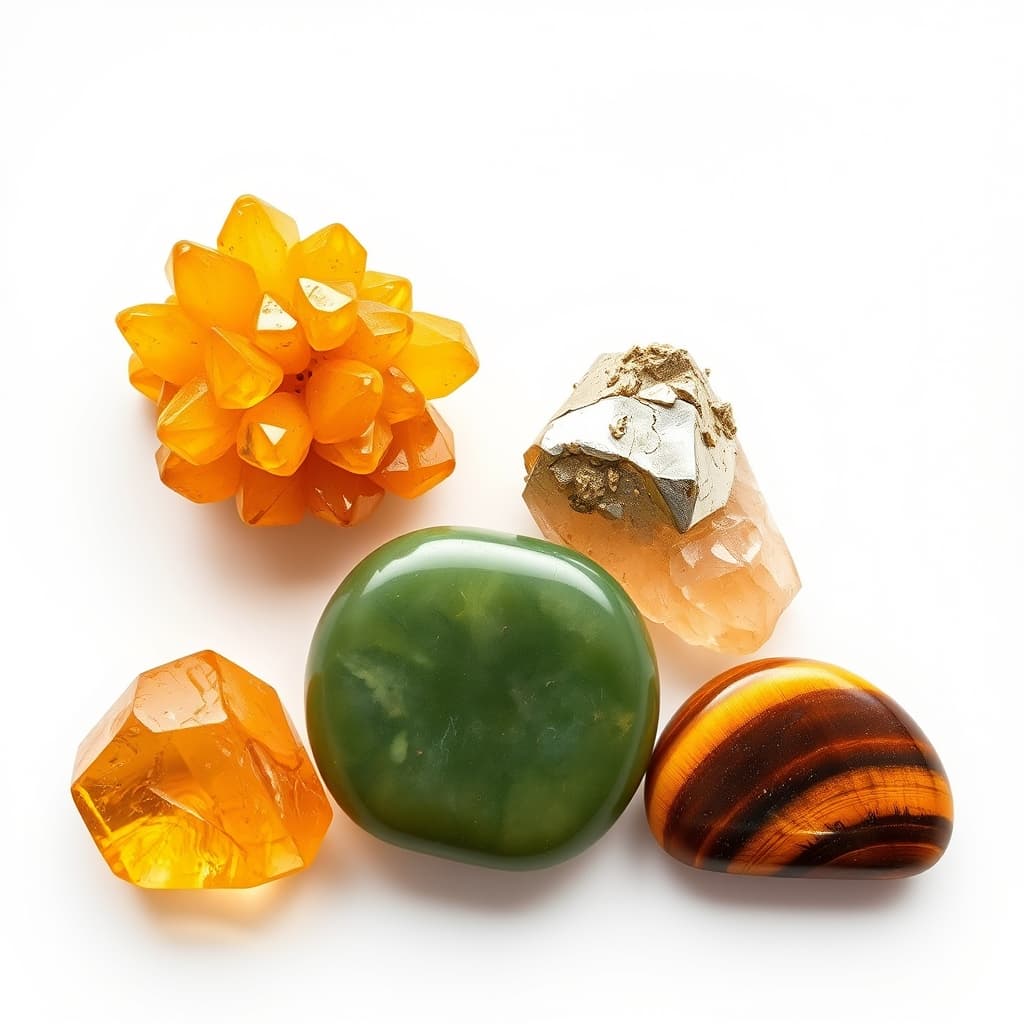
Crystals for Abundance, a Considered Practice
The traditional abundance stones, what the word actually meant in older practice before contemporary wealth marketing attached to it, and how to work with them slowly. Written for people who want a real practice.
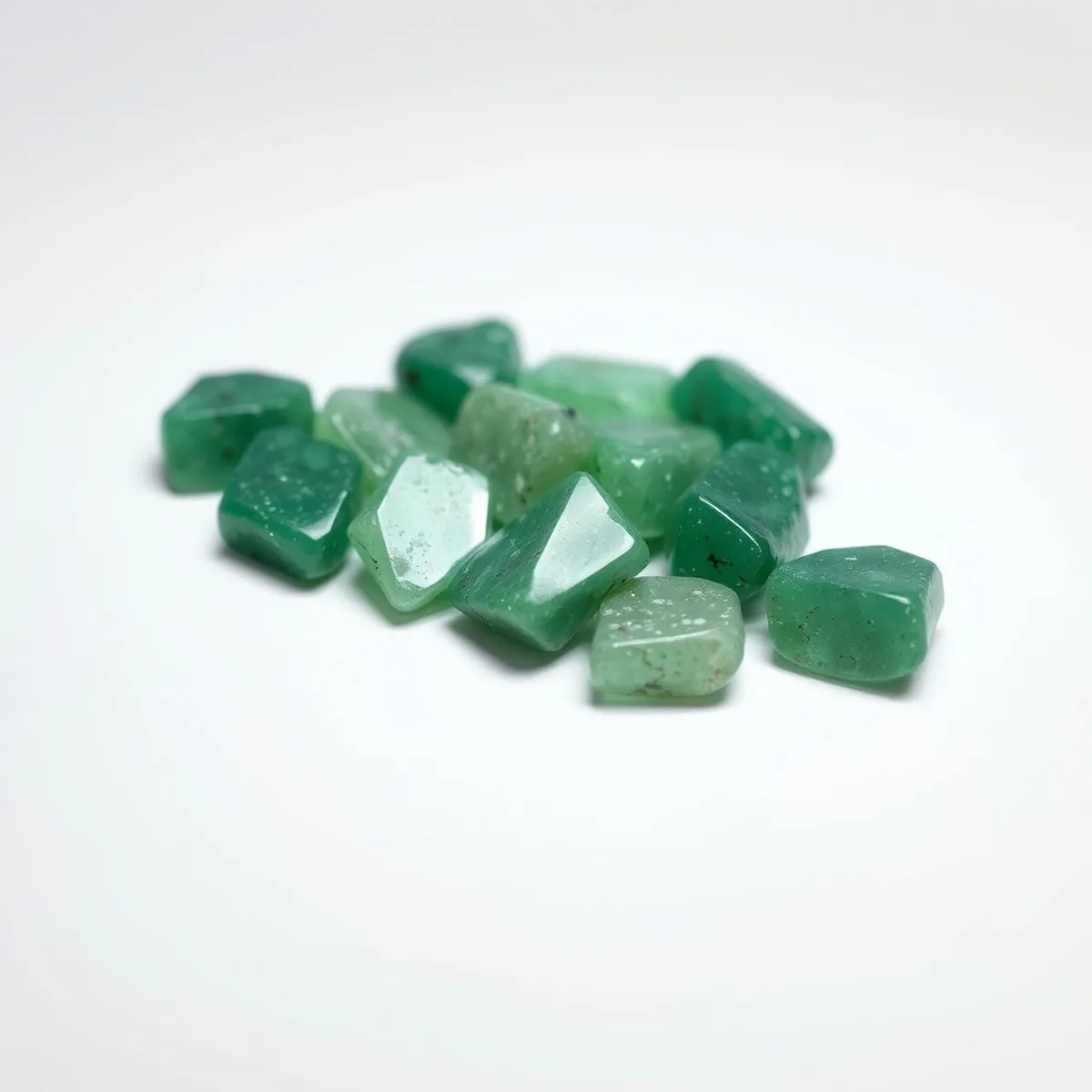
Green Aventurine, the Gentle Lucky Stone
The stone most commonly gifted for new beginnings. Where the sparkle comes from, why it has kept its association with luck for centuries, and why we are cautious about how luck gets marketed.
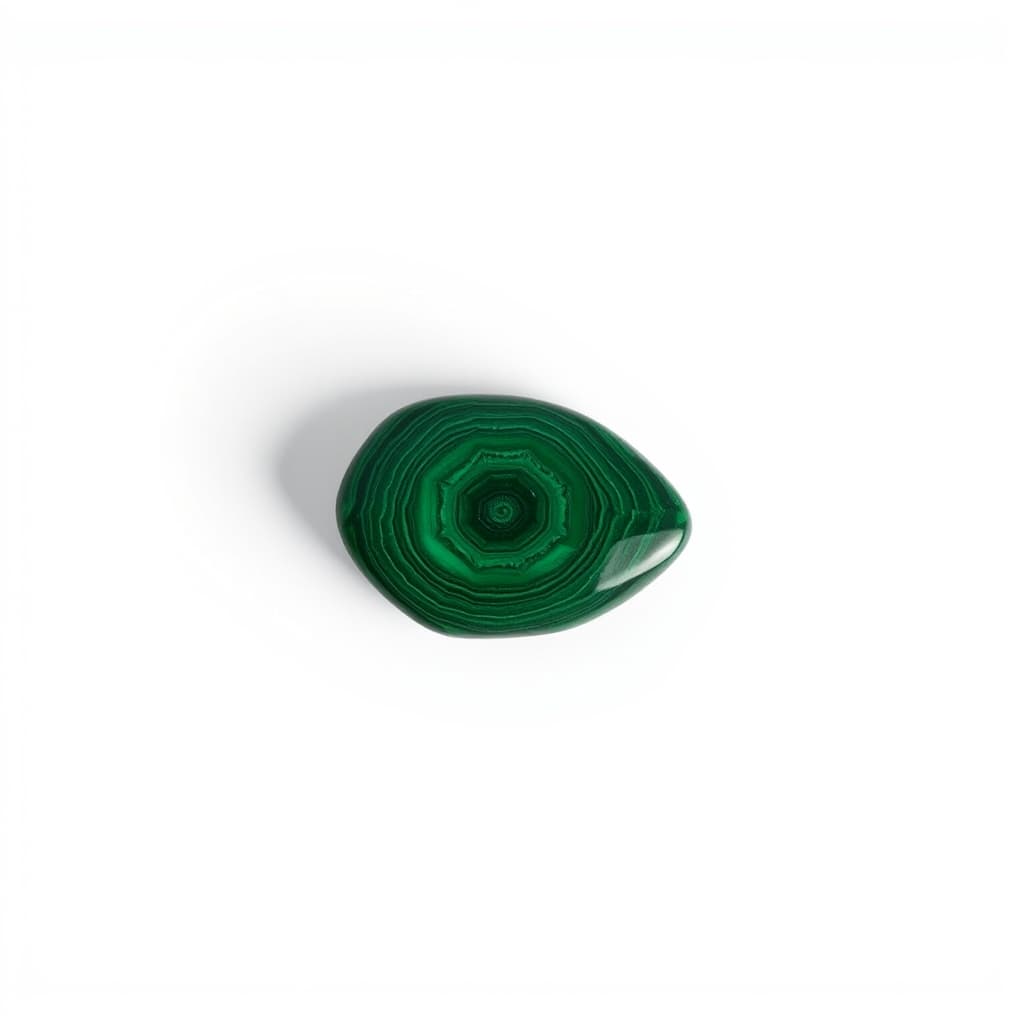
Malachite, the Green That Hides a Warning
Few stones are as striking as a polished malachite, and few crystals require as much honest handling. Where it comes from, why the dust is toxic, and how to live with one of the most beautiful and demanding stones in the mineral world.
Sit with us on Sundays.
One quiet letter every week. New writing, a crystal to consider, and whatever we have been thinking about. No tracking pixels, no affiliate noise.
By subscribing you agree to receive weekly emails from AU Crystals. Unsubscribe anytime. See our privacy note.