
How to Cleanse Crystals, Seven Methods Honestly Compared
The cleansing methods that survived across traditions, which stones tolerate each one, and how to pick the right method for your stone rather than following generic advice that damages softer crystals.
Quick facts11ShowHide
- ChakraAll chakras
- Mohs hardnessn/a
- Mineral familyPractice
- OriginVedic, Hellenistic, folk traditions worldwide
- Colourn/a
- ElementAll four
- ZodiacUniversal
- Sits well withResetting stones, seasonal ritual, intention setting
- Water safen/a
- Sun safen/a
- RarityUniversal practice
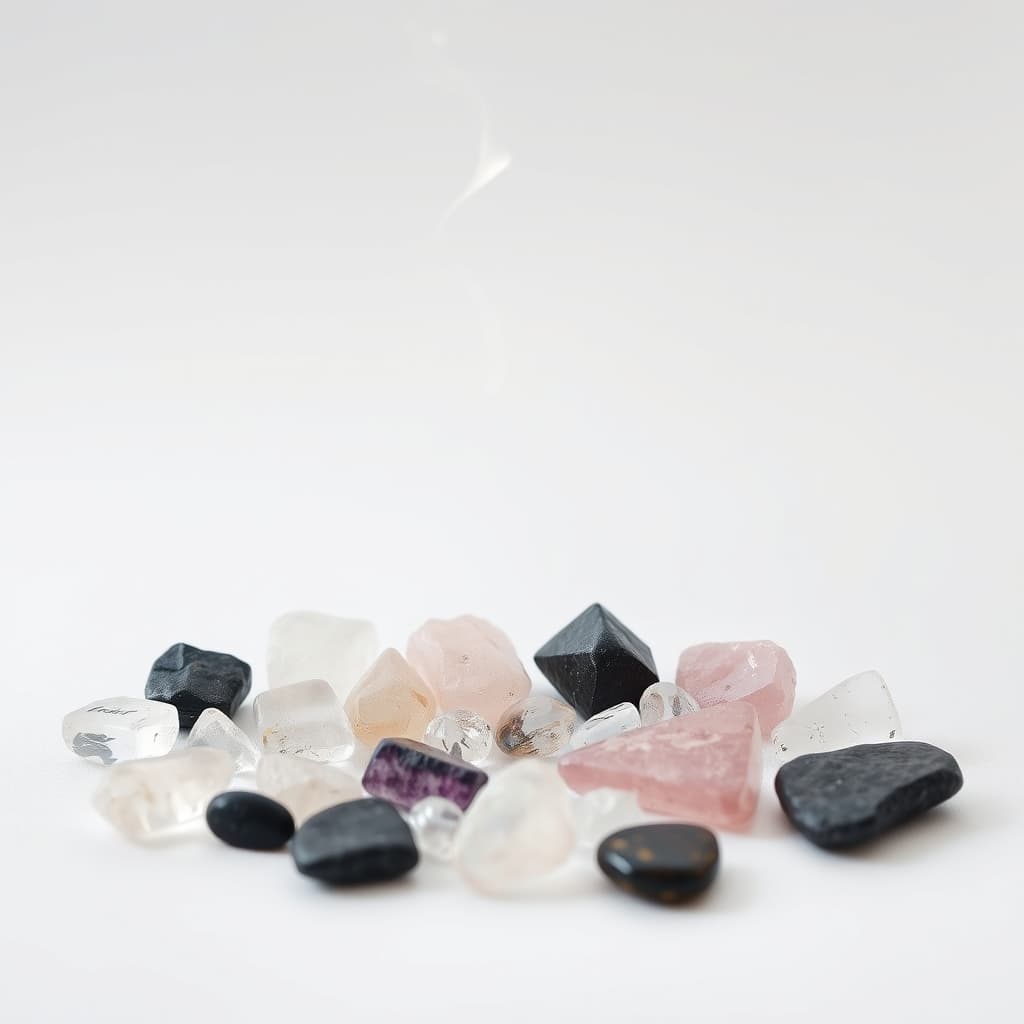
Crystal cleansing is the most misunderstood part of crystal practice. Half the internet tells you to soak every stone in salt water. The other half tells you to leave them in the sun. Both pieces of advice will damage some of your crystals. This guide goes through seven methods that have survived across traditions, explains what each actually does, and pairs them honestly with which stones tolerate what.
Why cleanse at all
The traditional idea is that crystals absorb ambient energy from the spaces and people around them, and periodic cleansing clears the accumulated load. Whether you hold the literal interpretation or treat it as a quiet ritual of intention, the practical outcome is the same. You take a moment, handle your stones, and set them aside feeling reset.
The one thing worth being clear about: cleansing is a care practice, not a medical or diagnostic procedure. It will not undo harm, and a stone left uncleansed is not dangerous. The ritual is for the practitioner more than the stone.
The seven methods
1. Moonlight
Works on: every crystal, without exception.
Place the stones on a windowsill, a balcony, or outside if you have safe outdoor space, during the night of a full moon or the three nights around it. Retrieve them in the morning before direct sunlight hits.
This is the safest default. Moonlight does not fade any known crystal, does not dissolve any mineral, and carries the longest continuous tradition across cultures. If you remember only one method, remember this one.
2. Sunlight
Works on: black tourmaline, hematite, tiger's eye, carnelian, pyrite, most opaque stones.
Damages: amethyst, rose quartz, fluorite, citrine, aquamarine, kunzite, celestite, smoky quartz, and most translucent coloured stones.
Sunlight has a real energetic tradition, but it also bleaches colour from many common crystals over a few hours of direct exposure. The rule of thumb is simple. Opaque dark stones handle sun. Translucent coloured stones do not. If you are unsure, use moonlight.
3. Smoke
Works on: every crystal.
Burn a small bundle of white sage, rosemary, cedar, juniper, or a piece of palo santo. Pass the stone through the smoke slowly, or hold the smoke over the stone in a bowl. A few seconds per piece is traditional.
Smoke is the universal fallback when water is unsafe, when sunlight would fade, and when outdoor space is unavailable. The smoke does the ritual work. The herb chosen is a matter of what your own tradition calls for. White sage has sustainability concerns in some regions; rosemary and cedar are good European alternatives.
4. Running water
Works on: quartz family (clear, rose, smoky, amethyst), agate, jasper, carnelian, obsidian, tiger's eye.
Damages: selenite, malachite, pyrite, halite, calcite, lapis lazuli (the dye leaches), turquoise, amber, pearl, and any porous or salt-based mineral.
Hold the stone under a stream of cool tap water for thirty seconds to a minute while visualising any accumulated energy rinsing away. Dry gently with a soft cloth.
The trap here is assuming all stones handle water. Many do not. The selenite guide covers this in detail for one of the most commonly damaged stones. Check your stone's water_safe attribute before using this method.
5. Salt
Works on: quartz family, most hard stones when not in direct contact.
Damages: selenite, malachite, opal, turquoise, pearl, amber, and any stone softer than 6 on the Mohs scale when salt is directly touching.
The traditional approach is to bury the stone in a bowl of dry salt overnight, or to leave it on top of a bed of salt without direct contact. Avoid submerging in salt water unless the stone is quartz-family and you rinse quickly afterwards.
Salt is traditional but over-used. Most crystals do not need it, and the risk of pitting softer stones is real. Reserve salt for pieces you know tolerate it, or use the indirect method where the stone sits on salt rather than in it.
6. Earth
Works on: every crystal, with patience.
Bury the stone in a small pot of garden soil, or directly in a flowerbed, for a full day and night. Mark the spot so you can retrieve it. This is the oldest recorded cleansing method, used across Indigenous and pre-industrial traditions worldwide.
The logic is that the earth reabsorbs the stone briefly before returning it. It is slower than other methods but carries a particular grounding quality that suits stones that have been through intense emotional periods.
7. Sound
Works on: every crystal.
Ring a singing bowl, a bell, or a tuning fork near the stone. Let the vibration pass through the space. Some practitioners chant a simple tone. The principle is that sound waves reset the stone's energetic field.
Sound cleansing is the fastest method. It takes under a minute per stone and leaves no physical trace. If you have a singing bowl already, this is worth learning. If you do not, moonlight or smoke are equally effective and require no equipment.
A comparison table
| Method | Time | Safe for all? | Best for |
|---|---|---|---|
| Moonlight | Overnight | Yes | Default for any stone |
| Sunlight | A few hours | No, fades many | Dark opaque stones |
| Smoke | Seconds | Yes | When indoors or rushed |
| Running water | Minute | No, damages soft | Quartz family |
| Salt | Overnight | No, pits softer stones | Hard stones, indirect |
| Earth | Day | Yes | Intense emotional reset |
| Sound | Minute | Yes | Busy practitioners |
How to choose
Three quick decisions.
If you have one stone and no equipment: moonlight. Always safe, always effective, one step.
If the stone is soft, porous, or salt-sensitive (selenite, malachite, pyrite, pearl): smoke or sound. Never water, never salt.
If the stone is dark and opaque (obsidian, black tourmaline, hematite): any of the seven will work. Sunlight is particularly traditional for these.
A closing thought
The best cleansing practice is one you actually do. A monthly moonlight cleansing on the windowsill takes zero effort and covers every stone in the collection. If you are the kind of practitioner who wants the ritual to be deliberate, smoke and sound give you that embodied moment. Either way, match the method to the mineral, and you will keep your stones for a lifetime.
For pairing this practice with authenticity work, see our guide on telling real amethyst from fake. A real stone rewards careful care. A dyed one will not.
Want a piece from this guide?
Until our shop is live, we hand-arrange orders through Instagram. Tap to ask what is currently available.
Preview the message
Hi AU Crystals,

I was reading your How to Cleanse Crystals, Seven Methods Honestly Compared page (aucrystals.com/blog/crystal-cleansing-full-guide).

I wanted to ask about the stones in this guide.
A starter message gets copied to your clipboard. Paste it into the DM on Instagram.
A few honest questions.
How often should I cleanse my crystals?
Tradition suggests roughly monthly, often aligned with the full moon. Practically, cleanse when a stone has been through an intense period (grief, conflict, illness in the home), when you first receive it, or whenever it feels right. There is no evidence that uncleansed stones are harmful. The ritual is for the user more than the stone.
Can I cleanse every crystal with water?
No. Selenite, malachite, pyrite, and most salt-soft minerals dissolve or pit when wet. Check the water_safe attribute on each stone before rinsing. When in doubt, choose smoke or moonlight, which are safe for everything.
Is moonlight actually required or is sunlight okay?
Moonlight is traditional and safe for every stone. Sunlight cleanses just as well energetically, but prolonged direct sun fades several common crystals including amethyst, rose quartz, fluorite, and citrine. Moon is the universal default.
Do I need a specific type of salt?
No. Traditional practice uses sea salt or rock salt. Table salt works the same. What matters is that the stone does not touch the salt directly if it is porous, since salt crystals can scratch softer stones and draw moisture from organic materials like amber or pearl.
Is sage the only smoke that works?
No. White sage, palo santo, rosemary, cedar, juniper, and frankincense all have cleansing traditions. White sage is over-harvested in some regions, so rosemary or cedar are more sustainable alternatives with similar use in European folk practice.
Keep reading.
How to Tell Real Amethyst from Fake, an Honest Buying Guide
The six practical tests that separate genuine natural amethyst from dyed glass, heat-treated citrine sold as amethyst, and synthetic lab stones. No specialist tools needed for most of them.
Selenite, the Delicate One
Soft enough to scratch with a fingernail, translucent enough to look lit from within. A careful guide to a stone that asks for more care than most, and why the traditional charging practice makes more sense than it might first appear.
Clear Quartz, the One That Does a Bit of Everything
Called the master healer in tradition and used in nearly every radio and watch in the twentieth century. A look at what clear quartz actually is, how it earned its reputation, and why it gets recommended for almost everything.
Mentioned in
Sit with us on Sundays.
One quiet letter every week. New writing, a crystal to consider, and whatever we have been thinking about. No tracking pixels, no affiliate noise.
By subscribing you agree to receive weekly emails from AU Crystals. Unsubscribe anytime. See our privacy note.